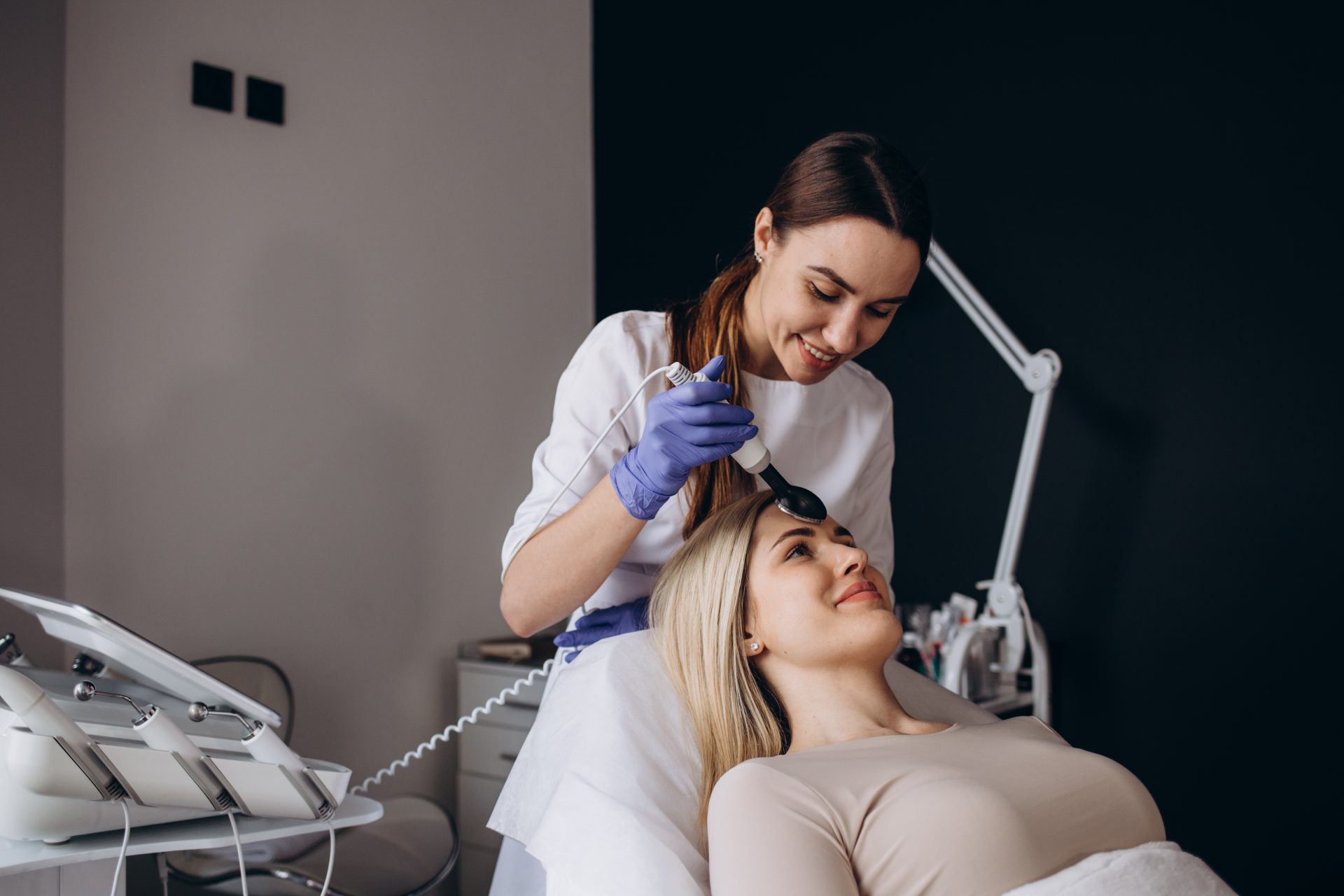
A medical director at a med spa must be a licensed physician, either an MD or a DO, who actively oversees all clinical operations your spa performs. The legal standard isn’t about having a physician’s name on file. It’s about one who reviews charts, approves protocols, and takes legal responsibility for every procedure delegated to your clinical staff. Who your medical director is and what they’re actually doing in the role are the two things that determine whether your med spa is compliant, and this guide covers both.
Key Takeaways
- A medical director must be an MD or DO with an active, unrestricted license in the state where your med spa operates, not just any physician. – Jump to Section: Who Qualifies as a Medical Director?
- The role carries real legal liability for chart review, delegation agreements, and every procedure performed under their oversight. – Jump to Section: Scope of Oversight & Liability
- Medical Director Co. places state-compliant MDs in 24 hours, with in-house attorney Bolton Harris, J.D., reviewing all agreements. – Jump to Section: How Medical Director Co. Places MDs in 24 Hours
Who Qualifies as a Medical Director?
Not every physician can step into a med spa medical director role. The role carries specific credential requirements, and those requirements are set by the state where your spa operates, not by the physician’s home state or professional reputation. Getting this wrong puts your operating license at risk before you treat a single patient.
Physician Credentials Required
Not every licensed physician qualifies to serve as a medical director for a med spa. The credential requirements are specific, and the license must be active and clean.
A qualifying medical director must meet all of the following:
- MD or DO degree from an accredited institution
- Active, unrestricted state medical license issued in the state where your med spa operates, not just the state where the physician resides
- No active board sanctions, probation, disciplinary actions, or conditions attached to their license
- Relevant training in aesthetic medicine, dermatology, or a related specialty. This is required in some states and strongly preferred by all.
That last point catches many operators off guard. A cardiologist or emergency physician technically holds a valid MD, but several state medical boards expect the medical director of a med spa to have direct knowledge of the procedures they’re overseeing. Training in injectables, laser therapy, or skin treatments isn’t optional in those states. It’s part of the compliance picture.
Before signing any medical director agreement, verify the physician’s license status directly with your state medical board. We do this as part of every placement at Medical Director Co.
Can a Nurse Practitioner or PA Serve as Medical Director?
The answer depends entirely on your state’s practice authority laws, and getting this wrong creates serious legal exposure.
Full-practice authority states: In states like Colorado, Oregon, and Washington, nurse practitioners can own and operate a med spa without physician oversight, and an NP can serve as clinical director with full responsibility for all clinical operations.
Restricted-practice states: In states like California, New York, and Texas, an MD or DO is required as medical director, and an NP cannot fulfill this role regardless of their clinical experience or credentials.
Physician assistants: PAs cannot serve as medical director in any state because they require physician supervision by definition, which disqualifies them from the top clinical oversight position.
Check the state-specific table below for your state’s requirements, or contact us directly for a compliance review before hiring.
Operating without a compliant medical director is a risk you can't afford.
Get matched with a state-licensed MD in 24 hours, flat monthly fee, no hidden costs. Get Started Today
State-Specific MD Requirements
Requirements vary significantly across states. The table below covers the 15 most commonly searched states. CPOM refers to the Corporate Practice of Medicine doctrine, which restricts non-physicians from owning medical practices in those states.| State | Required Credential | CPOM Law Applies | On-Site Visit Requirement | Notes |
|---|---|---|---|---|
| California | MD or DO | Yes | Periodic on-site presence required | Among the strictest CPOM enforcement. NPs cannot own. MSO structure strongly recommended. |
| New York | MD or DO | Yes | Not explicitly defined by statute | Physician must maintain meaningful oversight, not nominal involvement. |
| Texas | MD or DO | Yes | Not mandated by frequency | Medical board actively enforces CPOM. Delegation to RNs and NPs is heavily scrutinized. |
| Florida | MD or DO | No | Not required | No CPOM law. MD/DO still required as medical director for physician-delegated procedures. |
| Illinois | MD or DO | Yes | Not mandated by frequency | CPOM applies. Chart review documentation is an area of active enforcement. |
| Colorado | MD/DO or NP | No | Not required | Full-practice authority state. NPs may own and direct. NP owner bears full clinical director responsibility. |
| Arizona | MD or DO | No | Not required | No CPOM law. Medical director must still hold an active AZ license. |
| Georgia | MD or DO | Yes | Not required | CPOM applies. Physician must be actively involved — signature-only arrangements risk complaint. |
| Virginia | MD or DO | Yes | Not required | CPOM applies. Board of Medicine has issued guidance on medical director responsibilities in med spas. |
| Washington | MD/DO or NP | No | Not required | Full-practice authority state. Physician medical directors must hold active WA license. |
| Oregon | MD/DO or NP | No | Not required | Full-practice authority state. Physician medical director still needs OR licensure if used. |
| Nevada | MD or DO | No | Not required | No formal CPOM statute, but medical board oversight of med spas has increased. |
| New Jersey | MD or DO | Yes | Not mandated by frequency | CPOM applies. Supervisory relationship must be documented in the agreement. |
| Pennsylvania | MD or DO | Yes | Not required | CPOM applies. Physician assistants cannot serve as medical director. |
| Ohio | MD or DO | Yes | Not required | CPOM applies. Medical board requires evidence of active oversight, not passive contractual involvement. |
Scope of Oversight & Liability
Qualifying for the role is only half the equation. Once a medical director is in place, the law holds them personally accountable for how your med spa operates. That accountability is documented, auditable, and enforceable by your state medical board.What the Medical Director Is Legally Responsible For
Knowing who qualifies matters less than understanding what a medical director is legally obligated to do once they’re in the role. The exposure is real, specific, and tied to documented actions. A medical director at a med spa is responsible for:- Approving and signing all treatment protocols and standing orders before any procedure is performed
- For chart review, frequency requirements vary by state, but this must be documented and consistent, not occasional
- Credentialing and supervising all clinical staff who perform procedures under their delegation, including RNs, NPs, and PAs
- Patient complaint review and quality assurance processes
- Confirming that all procedures performed by non-physician staff fall within their licensed scope of practice
- Maintaining their own active licensure and completing required continuing medical education
- An MD who signs a contract but doesn’t review charts, audit protocols, or engage with the clinical operation isn’t a medical director but a liability. The medical board sees it the same way.
What Happens When a Complaint Is Filed
When a patient files a complaint with the state medical board, the investigation focuses on the medical director’s documented actions, not just the patient’s outcome. The board will look at whether protocols were written and current, whether chart reviews happened and were documented, and whether the staff member who performed the procedure was authorized under a valid delegation agreement. An absent medical director, one whose name appears on contracts but who has no documented involvement in clinical oversight, is the most common trigger for board complaints against med spa MDs. Consequences can include license sanctions, a required remediation program, financial penalties, or license suspension. These outcomes affect both the physician and your ability to operate.Delegation Agreements & Standing Orders
A compliant medical director relationship isn’t just about who you hire. It’s about what gets put in writing. Delegation agreements and standing orders are the legal documents that define the boundaries of your medical director’s oversight, and without them, your spa has no documented basis for the procedures your clinical staff performs.What Is a Physician Delegation Agreement?
A physician delegation agreement is a written document that authorizes a medical director to delegate specific clinical procedures to qualified non-physician staff. It defines which procedures can be delegated, to which staff roles, and under what conditions.- Every med spa needs one, even in full-practice authority states, written protocols are required documentation.
- A valid physician delegation agreement must include:
- Physician name, license number, and state of licensure
- Scope of procedures delegated, with each treatment listed specifically, not described in general terms
- Staff roles authorized to perform each procedure (by title and license type)
- Supervision level required: on-site, indirect, or telemedicine review
- Chart review frequency and documentation requirements
- Termination notice period, typically 30 to 90 days
- Indemnification and liability language protecting both parties
- A delegation agreement that omits any of these elements creates a gap the medical board can use against you in a complaint investigation.
What Are Standing Orders and How They Work
Standing orders are pre-approved treatment protocols signed by the medical director. They authorize clinical staff to administer specific treatments to eligible patients without a physician physically present for each patient encounter. The distinction between delegation agreements and standing orders is worth understanding clearly. The delegation agreement answers who can perform procedures. The standing order answers what treatment protocol applies to eligible patients. Both are typically required, so, one doesn’t replace the other.How Medical Director Co. Handles These Documents
Most independent medical directors sign agreements without any legal review of the documents they’re issuing. That’s a problem we built a solution for. At Medical Director Co., in-house healthcare attorney Bolton Harris, J.D., drafts and reviews all delegation agreements and standing orders as part of every placement. Every document is state-specific, procedure-specific, and built to hold up under medical board scrutiny, not pulled from a generic template.How Medical Director Co. Places MDs in 24 Hours
Most med spa owners spend weeks searching for a physician who understands aesthetic medicine, is licensed in their state, and will engage in a real oversight relationship. We’ve built a placement process that solves all three in 24 hours. Here’s what every placement includes:- 24-hour placement turnaround: Matched to your state, service menu, and compliance requirements from day one
- $799/month, all-in pricing: No setup fees, no per-chart fees, no hidden costs
- In-house legal review: Bolton Harris, J.D. drafts and reviews every delegation agreement and standing order before your spa operates under them
- State-compliant MD matching: Every physician holds an active, unrestricted license in the state where your med spa operates
- Ongoing compliance support: As your service menu expands, we update your agreements to keep your oversight structure current
Don't let a paperwork gap shut down your med spa.
Medical Director Co. places a state-licensed MD in 24 hours, agreements included Get Your Medical Director in 24 Hours
FAQ
What qualifications does a med spa medical director need?
A medical director must hold an MD or DO degree, an active, unrestricted medical license in the state where your med spa operates, and a clean disciplinary record. Training in aesthetic medicine or a related specialty is required by some states and strongly preferred by all others.
Does a medical director need to be on-site at my med spa?
Most states don’t mandate a specific on-site frequency but do require that the medical director be readily accessible by phone or telemedicine while the med spa is open. California has more defined expectations around physician presence. Check the state requirements table above for your state, or contact us for a specific answer.
What is included in a medical director agreement for a med spa?
A valid agreement must include the physician’s credentials and license information, the scope of procedures delegated, which staff roles are authorized for each procedure, supervision requirements, chart review frequency, documentation standards, the termination notice period, and indemnification language. At Medical Director Co., Bolton Harris, J.D., reviews every agreement before it’s executed.
Can a nurse practitioner serve as a medical director for a med spa?
In full-practice authority states, including Colorado, Oregon, and Washington, an NP may own and operate a med spa and serve as the clinical director. In restricted-practice states, including California, New York, and Texas, the medical director must be an MD or DO. Physician assistants cannot serve as medical directors in any state.
What are the medical director requirements for a med spa in California?
California enforces some of the strictest med spa compliance requirements in the country. The Corporate Practice of Medicine doctrine prohibits non-physicians from owning a medical practice, NPs cannot serve as medical director, and the MD or DO must maintain genuine clinical oversight of all procedures. Most California med spas structure their business through a Management Services Organization to separate business operations from clinical oversight. Our California consulting page covers the full structure.
Compliant on Paper Isn’t the Same as Compliant in Practice
Med spa medical director requirements set the floor for legal operation, but what protects your license, your investment, and your patients is a medical director who actually performs the role. At Medical Director Co., we match med spas with physicians who meet every state requirement and handle the legal documentation that most placements leave to chance, so you’re covered beyond the signature. For the full compliance picture at every stage of your med spa, see our medical spa requirements guide.
One missing signature could cost you your license.
We place a state-licensed MD within 24 hours, with every agreement reviewed by our in-house attorney. Place Your Medical Director Today

Bolton M. Harris, J.D., is a seasoned attorney with a formidable background in criminal law and a focus on healthcare law and compliance. As the in-house legal counsel at Medical Director Co., Harris brings a unique blend of prosecutorial experience and regulatory expertise to support healthcare professionals across Texas. Her career spans roles as a prosecutor in multiple counties and now as a trusted advisor on the legal intricacies of medical practice operations.
Education & Early Career
Bolton Harris completed her undergraduate studies at Southern Methodist University (SMU) in 2013. During her time at SMU, she was not only a dedicated student but also a competitive athlete on the university’s women’s swimming team. She went on to earn her Juris Doctor from Texas A&M University School of Law in 2016 and became a member of the Texas Bar that same year. Armed with a strong academic foundation and discipline honed as a student-athlete, Harris embarked on a career in criminal law immediately after law school.
Prosecutorial Experience in Texas
Bolton Harris began her legal career in public service as a criminal prosecutor. She served as an Assistant District Attorney in multiple jurisdictions, where she quickly rose through the ranks and handled a broad spectrum of cases. Some highlights of her prosecutorial career include:
- Assistant District Attorney, Dallas County, Texas: Prosecuted a high volume of criminal cases in one of the state’s busiest DA offices, gaining extensive trial experience in both misdemeanor and felony courts.
- Assistant District Attorney, Ellis County, Texas: Continued to hone her courtroom advocacy skills, known for meticulous case preparation and a tenacious pursuit of justice on behalf of the community.
- Assistant District Attorney, Navarro County, Texas: Broadened her legal expertise by handling diverse criminal matters in a smaller county, working closely with law enforcement and community leaders to uphold the law.
Through these roles, Harris built a reputation for being a tough but fair advocate. She brought numerous cases to trial and developed an in-depth understanding of the criminal justice system. This distinguished prosecutorial background laid a strong foundation for the next phase of her career in the private sector.
Healthcare Law & Compliance at Medical Director Co.
After her tenure as a prosecutor, Harris shifted her focus to healthcare law, applying her legal acumen to the medical field. She recognized that the same attention to detail and tenacity that served her in criminal law could benefit healthcare providers navigating complex regulations. Embracing this new direction, Harris became well-versed in the intricate laws governing medical practices – from licensing requirements to patient safety and privacy standards – and is passionate about helping practitioners stay compliant.
In her current role as the in-house attorney for Medical Director Co., Bolton Harris oversees all legal and compliance matters for the organization and its clients. Medical Director Co. is a nurse-owned firm that connects nurse practitioners (NPs), physician assistants (PAs), and registered nurses with qualified medical directors and collaborating physicians, offering fast placements and comprehensive compliance support for healthcare practices. Harris ensures that each of these partnerships and clinical ventures adheres to all applicable state and federal laws. She is responsible for drafting and reviewing collaborative practice agreements, advising on regulatory requirements, and providing ongoing legal counsel as clients establish and grow their clinics. Drawing on her prosecutorial eye for risk management, Harris proactively identifies potential legal issues and addresses them before they escalate, giving healthcare professionals peace of mind.
Bolton M. Harris’s multifaceted expertise – spanning high-stakes courtroom litigation to detailed healthcare compliance – makes her a formidable legal ally. Whether advocating in front of a jury or guiding a medical practice through regulatory hurdles, she remains committed to the highest standards of the legal profession. Her blend of courtroom-tested skill and healthcare law knowledge ensures that clients of Medical Director Co. receive elite-level counsel and steadfast protection in an ever-evolving legal landscape.