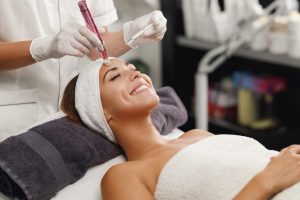
Which Medical Spa Digital Marketing Channels Work Best Today?
Medical spa digital marketing has shifted fast. Clients now choose providers through quicker, more visual pathways, and they expect medical
Find the exact rules, checklists, and resources you need to run a compliant clinic in your state.
Finding the right medical director for your practice shouldn’t be overwhelming. Our blog offers clear, practical guidance for RNs, NPs, and PAs seeking physician collaborators. Explore expert insights about everything from legal tips to partnership strategies to help you run a compliant, successful practice with confidence.

Medical spa digital marketing has shifted fast. Clients now choose providers through quicker, more visual pathways, and they expect medical

Disclaimer: This material is provided for educational and informational purposes only. It does not constitute legal or medical advice or

Disclaimer: This guide is for educational and informational purposes only. It does not constitute legal or medical advice. Requirements may

Disclaimer: This material is provided for educational and informational purposes only. It does not constitute legal or medical advice or

Disclaimer: This material is provided for educational and informational purposes only. It does not constitute legal or medical advice or

Disclaimer: This guide is for educational purposes only and does not constitute legal or medical advice. Laws and interpretations may

Disclaimer: This material is for educational and informational purposes only and does not constitute legal or medical advice. Always verify

Opening a medical spa looks appealing from the outside. The market is growing, demand is steady, and recurring revenue makes

The medical aesthetics industry is expanding fast, but growth is not automatic. Clinics scale when they understand the structural forces
The medical director must be a Texas-licensed physician (MD/DO) with clinical control over medical decisions.
Most medspas use a physician-owned professional entity for the clinical side, plus a separate management services organization (MSO) for the business side.
Medical directors must be Texas-licensed MDs/DOs. NPs and PAs require delegation agreements to prescribe.
The medical director must be a Florida-licensed physician (MD or DO) with ultimate authority over medical decisions.
Non-physicians may own clinics, but a Florida-licensed MD/DO must be medical/clinic director with authority over protocols, supervision, and records. MSOs handle business only.
Florida’s Health Care Clinic Act requires that each licensed clinic designate a Florida-licensed MD or DO as medical/clinic director.
Medical direction & CPOM – In California, the medical director must be a California-licensed physician (MD/DO) and retain final authority over clinical decisions.
In California, only a licensed physician (MD/DO) may direct or delegate medical services such as injectables, lasers, radiofrequency, or other energy-based procedures.
California maintains one of the most regulated frameworks for weight-loss and telehealth clinics in the nation.
New York’s medical compliance framework is defined by strict physician oversight, clear delegation limits, and robust documentation expectations.
New York remains one of the most highly regulated states for medical spas and aesthetic practices.
Only a New York–licensed MD or DO may own or control a medical practice.
Georgia restricts lay control of medical practices.
Georgia requires all medical services, including aesthetic and wellness treatments, to be delivered through a physician-owned or physician-controlled entity.
All clinical services must be delivered through a physician-owned or physician-controlled entity.
Arizona enforces the Corporate Practice of Medicine (CPOM) doctrine, requiring that only licensed physicians control medical decision-making.
Arizona requires medical services to be delivered through a physician-owned or physician-controlled entity, preserving physician authority over clinical decisions.
Clinics must be physician-owned or physician-controlled under Arizona’s Corporate Practice of Medicine (CPOM).
Corporate Practice of Medicine (CPOM) Nevada requires all medical decision-making to remain under a Nevada-licensed MD/DO.
Corporate Practice of Medicine (CPOM): Medical decision-making must remain under a Nevada-licensed MD/DO.
Medical decision-making must remain under a Nevada-licensed MD/DO.
Pennsylvania does not have a single CPOM statute; compliance is enforced through unlicensed practice prohibitions and physician unprofessional conduct rules.
Pennsylvania requires that medical procedures in medspas be directed and supervised by a Pennsylvania-licensed physician (MD or DO) with real clinical authority, not just a title.
Pennsylvania requires physician-led clinical control for weight-loss and telehealth clinics; MSOs may manage business operations but cannot influence diagnosis, treatment, prescribing, or medical records.
Ohio permits business entities and MSO models, but licensed physicians must retain real authority over diagnosis, treatment, prescribing, delegation, supervision, and quality assurance.
Ohio medspas are regulated through physician delegation, scope-of-practice, and Medical Board enforcement, not a single “medspa statute.”
Ohio requires physicians to retain authority over diagnosis, treatment, prescribing, delegation, and quality assurance; business owners and MSOs may handle only nonclinical functions.