
Hiring a medical director is one of the most important decisions you’ll make as a Texas med spa operator. The physician you choose helps shape the clinical oversight structure of your practice, influences day-to-day compliance processes, and plays a key role in supporting patient safety. A strong physician arrangement can help create a stable foundation for growth. A poorly structured arrangement can leave documentation gaps, unclear supervision expectations, and operational challenges that may not become apparent until much later.
If you’re researching how to hire a medical director Texas med spa operators can rely on, you’re not alone. Many clinic owners start the search through peer referrals, Facebook groups, professional networking circles, or physician matching platforms. While those channels can produce candidates, they rarely provide a structured physician vetting process. That is one reason ghost medical director arrangements and incomplete documentation remain common throughout the industry.
This guide provides a practical framework for evaluating, hiring, and onboarding a Texas medical director. If you’re hiring for the first time, you can use it as a step-by-step roadmap. If you already have a physician arrangement in place, you can use it as a retroactive audit to compare your current setup against a proper vetting standard. For operators who prefer a turnkey solution, Medical Director Co. has already completed every step in this guide for every physician in its Texas network.
Every step in this guide
license verification, aesthetic experience vetting, malpractice coverage confirmation, attorney-drafted MDA and PAA, and procedure-specific standing orders — is already completed for every physician in Medical Director Co.'s Texas network. Get matched in 24 hours for $799/month. No setup fees. No long-term contract.
Before You Start — What You’re Actually Looking For
Many Texas med spa operators begin the hiring process with a simple goal: find a physician who is willing to serve as a medical director. While willingness matters, it is only the starting point. A physician who agrees to sign documents is not necessarily a physician who is prepared to fulfill the responsibilities that come with overseeing a non-physician aesthetic practice.
The strongest physician arrangements are built on more than availability. They are built on verified credentials, relevant clinical experience, appropriate malpractice coverage, and a demonstrated commitment to participating in the clinic’s ongoing operations. These factors determine whether a physician can provide meaningful oversight through chart review, standing orders, and clinical consultation—not just lend their name to the practice.
This distinction is important whether you’re hiring a medical director for the first time or evaluating an existing arrangement. Many informal physician relationships begin through referrals and networking connections without a structured physician vetting process. Reviewing candidates against clear criteria helps you avoid ghost medical director arrangements and identify physicians who are equipped to support a Texas med spa under the expectations established by Texas Occupations Code Chapter 157 and applicable Texas Board of Nursing (BON) and Texas Physician Assistant Board (TPAB) requirements.
The Four Non-Negotiable Criteria for a Texas Med Spa Medical Director
Before investing time in interviews, document review, or contract negotiations, apply these four screening criteria to every candidate:
Active, Unrestricted Texas Medical License Verify the physician’s license independently through the Texas Medical Board (TMB) at tmb.state.tx.us. Never rely solely on a physician’s representation of their licensure status.
Relevant Clinical or Aesthetic Experience The physician does not need to be a cosmetic specialist, but should understand the procedures being authorized, common aesthetic medicine workflows, and Texas delegation requirements that apply to your providers.
Malpractice Coverage That Includes Supervisory Liability Confirm that the physician’s malpractice coverage extends to oversight of non-physician providers. This verification should be obtained in writing before any Medical Director Agreement (MDA) or Prescriptive Authority Agreement (PAA) is signed.
Genuine Engagement With the Role The physician should be willing to conduct chart reviews, approve procedure-specific standing orders, and remain available for clinical consultations within an agreed response timeframe.
Any physician who resists one or more of these requirements may be presenting the warning signs of a ghost MD arrangement rather than a legitimate medical director relationship.
The Step-by-Step Hiring Process — From Search to Signed Agreement
Step 1 — Define Your Scope Before You Search
Before you begin contacting physicians, define exactly what you need the physician to oversee. Many operators start searching for candidates first and determine responsibilities later. That approach makes it difficult to evaluate whether a physician has the experience necessary to support your practice.
Start by creating a complete inventory of your current and planned treatment menu. Include every procedure your clinic offers or intends to offer, such as Botox, dermal fillers, laser treatments, thread procedures, prescription skincare programs, and any services that require a Good Faith Exam (GFE). Next, identify the credentials of every treating provider involved in patient care, whether they are nurse practitioners (NPs), physician assistants (PAs), registered nurses (RNs), or a combination of provider types.
Then review the Texas-specific delegation requirements that apply to those procedures and providers under Texas Occupations Code Chapter 157. This exercise serves two purposes. First, it helps you determine what level of aesthetic experience and delegation familiarity the physician must possess. Second, it creates the foundation for the procedure-specific standing orders the physician will ultimately review and sign. A physician who is unfamiliar with your treatment menu cannot create meaningful standing orders for it.
Step 2 — Source Candidates Through the Right Channels
Once you understand your clinic’s scope, begin sourcing physician candidates through channels that match your timeline, budget, and risk tolerance.
Peer referrals, aesthetic medicine forums, and professional networking groups are often the fastest option. However, these sources are largely unvetted. A physician who worked successfully for another clinic may not have the experience, availability, or supervision style your practice requires. Informal referrals also provide no guarantee regarding license verification, malpractice coverage, or engagement quality.
The Texas Medical Association physician directory can help you identify Texas-licensed physicians, but it does not indicate whether a physician has aesthetic medicine experience or is interested in supervising non-physician providers.
Staffing agencies and physician broker services can accelerate the search process compared to cold outreach. However, many charge setup fees, require lengthy onboarding timelines, and vary significantly in document quality and compliance support.
Healthcare attorneys may also refer physicians familiar with Texas med spa arrangements. These referrals can be valuable, though attorneys often know physicians primarily through legal matters rather than day-to-day clinical oversight performance.
Medical Director Co. offers a different model. Physicians in its Texas network are pre-vetted for licensure, aesthetic familiarity, malpractice coverage, and supervisory readiness. Operators can be matched within 24 hours, with attorney-drafted documents included, a flat $799 monthly fee, and no setup fees. For operators who want to conduct an independent search, each sourcing channel has value. For operators focused on speed and documentation, MDCo provides the most streamlined path from search to placement.
Step 3 — Verify the Texas Medical License — Independently
Once you identify a potential candidate, verify every credential yourself. Do not rely on a physician’s resume, website biography, LinkedIn profile, or verbal confirmation.
Start by visiting the Texas Medical Board (TMB) website at tmb.state.tx.us and using the physician search tool. Enter the physician’s full name or Texas license number. Confirm that the license status is listed as Active and not Inactive, Suspended, Revoked, or otherwise restricted. Review the physician’s record for any disciplinary actions, conditions, or restrictions. Any restriction should be understood before moving forward, particularly if it could affect the physician’s ability to supervise non-physician providers.
While reviewing the record, note any board certifications and verify the license expiration date. A license scheduled to expire before the anticipated start of the engagement should prompt additional questions about renewal status.
Next, verify that professional liability insurance is currently in force. Request confirmation directly from the physician’s malpractice insurer rather than relying solely on documents provided by the physician.
Medical Director Co. independently verifies Texas licensure and malpractice coverage for every physician in its network and continues monitoring both throughout the engagement, reducing the administrative burden on clinic operators.
Step 4 — Evaluate Aesthetic Experience and Delegation Familiarity
A physician does not need to be a dermatologist, plastic surgeon, or full-time cosmetic injector to serve as an effective Texas med spa medical director. What matters is whether the physician understands the procedures they will be authorizing and the delegation framework that governs those procedures.
Look for candidates with working familiarity with injectable treatments, laser procedures, prescription aesthetic therapies, Good Faith Exam requirements, and the practical realities of overseeing non-physician providers. The physician should also understand Texas Occupations Code Chapter 157, as well as the Texas Board of Nursing (BON) and Texas Physician Assistant Board (TPAB) standards that apply to your clinic’s provider mix.
During the evaluation process, ask specific questions rather than relying on general claims of experience:
Have you previously served as a medical director or collaborating physician for an aesthetic clinic?
Are you familiar with the Texas BON’s Prescriptive Authority Agreement (PAA) requirements and chart review expectations?
Are you willing to sign procedure-specific standing orders for the treatments currently offered by our clinic?
Can you describe what you look for when reviewing an injectable patient chart?
Strong candidates answer these questions confidently and provide examples from prior experience. They can discuss chart review processes, delegation responsibilities, documentation expectations, and clinical consultation protocols in practical terms. A physician who struggles to answer these questions or responds with vague generalities may not have the experience necessary to fulfill the role effectively.
Step 5 — Confirm Malpractice Coverage and Supervisory Liability Extension
This is one of the most frequently overlooked steps in the Texas med spa medical director hiring process. Many operators verify that a physician has malpractice insurance but never confirm what the policy actually covers.
Your physician’s malpractice policy should explicitly cover supervisory liability—the risk associated with overseeing non-physician providers who perform delegated treatments. Some physicians carry occurrence-based or claims-made policies that provide coverage for their own direct patient care but exclude liability arising from supervision, delegation, or aesthetic medicine services. If a physician signs a Medical Director Agreement (MDA) under a policy that excludes supervisory liability, they may have a significant coverage gap, and the clinic has no documented evidence that the oversight arrangement is insured.
Request a current certificate of insurance directly from the physician’s malpractice carrier. Verify that the policy is active, review the coverage period and liability limits, and confirm there are no exclusions related to non-physician supervision or aesthetic medicine. If the policy is claims-made, discuss whether tail coverage would be required if the engagement ends.
A physician whose policy excludes aesthetic medicine or supervisory liability is not appropriately insured for a Texas med spa medical director role.
Step 6 — Conduct the Physician Interview — With a Structured Question Set
Treat the physician interview as a functional evaluation rather than a professional courtesy call. Your goal is to determine how the physician will perform in the role—not simply whether they are willing to accept it.
Start with a question about chart reviews:
“Walk me through how you conduct a chart review for an injectable clinic. What do you look for?”
A strong answer references specific clinical checkpoints such as documentation completeness, treatment-to-indication alignment, contraindication screening, informed consent documentation, adverse outcome patterns, and follow-up notes. A weak answer sounds like, “I just make sure the documentation is there.”
Next, ask:
“How quickly can you respond to a clinical consultation question from my NP during a patient appointment?”
Strong candidates provide a defined response standard, such as responding within two hours for routine matters and immediately by phone for urgent clinical concerns. Weak candidates typically answer, “I’ll do my best.”
Then ask:
“Have you reviewed standing orders for injectable procedures before, and can you draft or review procedure-specific orders for our current treatment menu?”
A strong answer includes details about treatment protocols, contraindications, medication parameters, delegation requirements, and review schedules. A weak answer is, “I usually just sign whatever the clinic sends me.”
Any physician who struggles to answer these questions confidently may be displaying the characteristics of a ghost MD candidate rather than an engaged medical director.
Step 7 — Execute the Documents — In the Right Order
Once you select a physician, execute the documentation in the correct sequence. The order matters because each document supports the next stage of the relationship.
First, engage a Texas healthcare attorney to draft or review the Prescriptive Authority Agreement (PAA) and Medical Director Agreement (MDA) before either document is signed.
Second, finalize procedure-specific standing orders for every treatment on your current menu. These standing orders should reflect the scope established in Step 1 and be reviewed by the physician before implementation.
Third, execute the PAA. Both parties should sign the agreement, and nurse practitioner operators should file the PAA with the Texas Board of Nursing (BON) before any prescribing activities occur under the arrangement.
Fourth, execute the MDA. The agreement should establish chart review requirements, clinical consultation procedures, response times, standing order review schedules, and termination provisions.
Fifth, verify BON filing confirmation. Confirm that the PAA appears in the NP’s BON record before treating patients under the new arrangement.
Finally, brief all treating staff. Every provider should know the medical director’s name, role, contact method, and consultation protocol.
Medical Director Co. manages this entire process as part of its $799-per-month arrangement, including attorney-drafted PAAs and MDAs, procedure-specific standing orders, BON filing coordination, and ongoing support—with no setup fees.
Red Flags — When to Walk Away From a Candidate
Many Texas med spa operators discover problems with a physician arrangement only after the documents are signed. The warning signs are often visible much earlier. Whether you’re evaluating a new candidate or auditing an existing relationship, these red flags deserve immediate attention.
Seven Red Flags When Vetting a Texas Medical Director
Refuses to provide a Texas license number for independent verification. A legitimate physician has nothing to hide on the Texas Medical Board website. Resistance to independent license verification is a disqualifying signal.
Malpractice policy excludes supervisory liability or aesthetic medicine. Always obtain confirmation directly from the insurer. A physician’s verbal assurance is not a substitute for written coverage verification.
Unwilling to sign procedure-specific standing orders. A physician who wants to approve all treatments through a generic authorization may not understand Texas delegation requirements or may be unwilling to perform the work the role requires.
Pushes back on monthly chart reviews. If a physician suggests quarterly reviews are sufficient or appears unfamiliar with chart review expectations, they may not be prepared for the oversight responsibilities associated with the arrangement.
No defined response time for clinical consultations. “I’ll be available if needed” is not an operational protocol. Clinical accessibility should include a documented response standard.
Wants a multi-year locked contract before engagement. Long-term commitments before performance is established often benefit the physician more than the clinic and can limit your flexibility if the relationship proves ineffective.
Can’t describe the GFE protocol or the clinic’s treatment menu. A physician who cannot explain what they are authorizing cannot provide meaningful oversight of those services.
Any one of these red flags is sufficient grounds to pause the hiring process or reconsider an existing arrangement.
If your current arrangement has one or more of these red flags
Medical Director Co. can replace it—matched and documented in 24 hours, $799/month, no setup fees, and no long-term contract.
The MDCo Alternative — What the Turnkey Process Looks Like
24-hour matching replaces much of the work in Steps 1 through 4. Every physician in MDCo’s Texas network is pre-vetted for active Texas licensure, supervisory malpractice coverage, and relevant aesthetic or clinical oversight experience. You provide your treatment menu and provider credentials, and MDCo matches you with a physician whose experience aligns with your clinic’s needs. What often takes weeks or months through independent sourcing can be completed within one business day.
$799 per month flat rate eliminates the uncertainty that frequently accompanies physician placement. The monthly fee covers physician placement, document preparation, ongoing chart reviews, and clinical consultation availability. There are no separate charges for standing order development, per-chart review fees, or annual renewal costs.
No setup fees means the onboarding process described in Steps 6 and 7 is included from the start. Physician placement, attorney-drafted agreements, standing orders, and coordination support are part of the standard arrangement.
Attorney-drafted documents simplify one of the most time-consuming stages of the hiring process. Every PAA, MDA, and standing order package is prepared by attorneys familiar with Texas healthcare compliance requirements, allowing operators to receive completed documentation ready for implementation and recordkeeping.
No long-term contract is the direct opposite of Red Flag #6 discussed above. MDCo’s month-to-month arrangement is structurally opposite to the locked multi-year contract that appears on the red flag list above. The flexibility is the quality signal.
Skip the seven steps. Get a fully vetted, fully documented Texas medical director in 24 hours — $799/month, no setup fees.
Frequently Asked Questions About Hiring a Medical Director for a Texas Med Spa
How Long Does It Take to Hire a Medical Director for a Texas Med Spa?
When handled independently, hiring a Texas medical director typically takes four to twelve weeks. Candidate sourcing often requires one to three weeks. License verification, malpractice coverage review, and credential checks may add another week. Physician interviews can take one to two weeks, while document drafting and legal review often require two to four weeks. If a Prescriptive Authority Agreement (PAA) is involved, filing and confirmation through the Texas Board of Nursing (BON) may add another one to two weeks. For operators facing an opening deadline or an expiring arrangement, these timelines can create operational pressure. Medical Director Co. compresses physician sourcing, vetting, and document preparation into 24 hours through its pre-vetted network. BON processing timelines remain subject to BON procedures.
How Do I Verify a Physician’s Texas Medical License Before Hiring Them?
Go to tmb.state.tx.us and access the Texas Medical Board physician search tool. Enter the physician’s full name or Texas license number and review the record carefully. Confirm that the license status shows Active and Unrestricted. Review any disciplinary actions, restrictions, probationary conditions, or other notations that could affect the physician’s ability to supervise non-physician providers. Also verify the license expiration date before proceeding. This process should always be completed independently by the clinic operator rather than relying on a physician’s self-report. Medical Director Co. independently verifies every physician’s Texas license before placement and continues monitoring licensure status throughout the engagement as part of its $799-per-month arrangement.
Does a Texas Med Spa Medical Director Need Malpractice Insurance?
Yes. The physician should maintain malpractice coverage that specifically extends to supervisory liability. Coverage should not exclude oversight of nurse practitioners, physician assistants, registered nurses, or aesthetic medicine services performed under delegated authority. Request a current certificate of insurance directly from the malpractice carrier and verify policy limits, effective dates, and any exclusions. You should also determine whether the policy is occurrence-based or claims-made because claims-made coverage may require tail coverage when the engagement ends. Failure to verify supervisory liability coverage can create an insurance gap for both the physician and the clinic if a patient dispute or adverse event occurs.
What Experience Should a Texas Med Spa Medical Director Have?
The ideal candidate does not need to be a practicing cosmetic injector or board-certified aesthetic specialist. However, the physician should have experience supervising non-physician providers, familiarity with Texas Occupations Code Chapter 157, and working knowledge of Texas Board of Nursing (BON) and Texas Physician Assistant Board (TPAB) requirements. The physician should also understand the procedures being authorized, including injectables, laser treatments, prescription skincare programs, and Good Faith Exam requirements when applicable. Prior experience serving as a medical director or collaborating physician for an aesthetic practice is highly valuable because it reduces the learning curve associated with chart reviews, standing orders, and clinical consultation responsibilities.
Do I Need a Healthcare Attorney to Hire a Medical Director in Texas?
For document preparation and review, yes. A Prescriptive Authority Agreement (PAA) and Medical Director Agreement (MDA) are legal documents that help establish the clinical oversight structure of the practice. Generic templates downloaded online may not address Texas-specific requirements or clearly define each party’s responsibilities. While you do not necessarily need an attorney to source physician candidates, a Texas healthcare attorney should review or draft the agreements before execution. Because every clinic’s facts and circumstances differ, operators should seek legal advice regarding their specific situation. Medical Director Co. includes attorney-drafted PAAs and MDAs in every Texas placement through its $799-per-month arrangement, with no additional setup fee.
Can I Hire a Medical Director Who Is Licensed in Another State for My Texas Med Spa?
No. A physician serving as a delegating physician in Texas must hold an active Texas medical license. A license issued by another state does not authorize a physician to perform delegation functions for a Texas med spa unless the physician also maintains active Texas licensure. This requirement is central to the physician’s authority under Texas law and is not simply an administrative formality. Operators should independently verify Texas licensure through the Texas Medical Board before entering into any agreement. Because licensing and delegation requirements can change, clinics with unique circumstances should consult a qualified Texas healthcare attorney for legal guidance.
What Questions Should I Ask a Medical Director Before Hiring Them for My Texas Med Spa?
Five questions often reveal whether a physician is prepared for the role. First, ask how they conduct chart reviews for injectable clinics; strong answers reference documentation quality, contraindications, treatment appropriateness, and outcomes. Second, ask about response times for clinical consultations; strong candidates provide specific timelines. Third, ask about familiarity with BON PAA chart review expectations; experienced physicians should understand applicable review requirements. Fourth, ask whether they have drafted or reviewed standing orders for aesthetic procedures such as injectables or laser treatments. Finally, ask about malpractice coverage and supervisory liability. Strong candidates can explain their coverage and provide documentation upon request.
How Much Should I Budget for Hiring a Medical Director for My Texas Med Spa?
The total cost often extends beyond the physician’s monthly retainer. Independent arrangements may involve healthcare attorney fees for PAA and MDA drafting, physician matchmaking or broker fees, ongoing monthly retainers, chart review fees, and annual renewal expenses. Attorney costs alone may range from approximately $1,500 to $4,000, while physician retainers vary significantly depending on the arrangement. Some physicians also charge separately for chart reviews. Medical Director Co. consolidates these costs into a flat $799 monthly fee that includes physician placement, attorney-drafted documents, ongoing oversight services, and no setup fees, annual renewal fees, or per-chart billing charges.
What Documents Need to Be in Place Before a Texas Med Spa Can Start Treating Patients?
Before treating patients, clinics should confirm that all required documentation is complete and accessible. For nurse practitioner arrangements, the Prescriptive Authority Agreement should be executed and filed with the Texas Board of Nursing. The Medical Director Agreement should also be fully executed and should address chart review requirements, accessibility standards, and termination provisions. Procedure-specific standing orders should be signed for all treatments offered by the clinic. Good Faith Exam protocols should be documented where applicable. The physician’s Texas license information and malpractice certificate should be maintained on file. Staff should also understand the physician’s role, contact information, and clinical consultation process before patient treatment begins.
What Makes Medical Director Co. Different From Hiring a Medical Director Independently in Texas?
Independent hiring often involves multiple vendors, weeks of candidate sourcing, attorney coordination, document preparation, and ongoing uncertainty about physician availability. Medical Director Co. streamlines the process through a pre-vetted Texas physician network and provides placement within 24 hours in many cases. The $799 monthly fee includes physician placement, attorney-drafted PAAs and MDAs, procedure-specific standing orders, ongoing chart reviews, clinical consultation availability, and no setup fees or per-chart billing. The arrangement is month-to-month rather than locked into a long-term contract. If a physician becomes unavailable, replacement support is available through the network. The primary advantage is certainty: the vetting, documentation, and oversight framework is already established and maintained. Get matched in 24 hours.
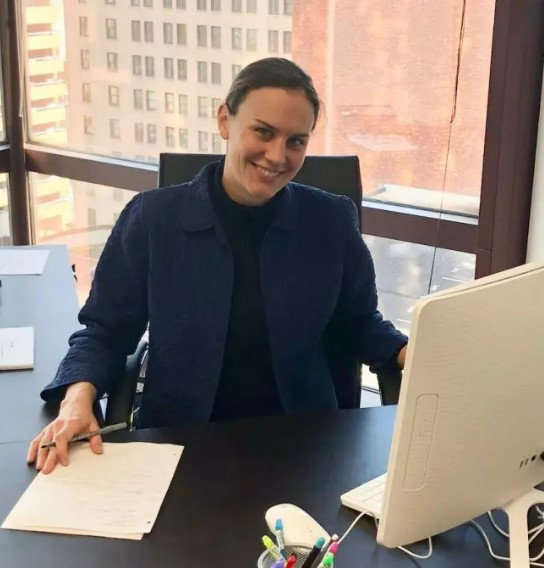
Bolton M. Harris, J.D., is a seasoned attorney with a formidable background in criminal law and a focus on healthcare law and compliance. As the in-house legal counsel at Medical Director Co., Harris brings a unique blend of prosecutorial experience and regulatory expertise to support healthcare professionals across Texas. Her career spans roles as a prosecutor in multiple counties and now as a trusted advisor on the legal intricacies of medical practice operations.
Education & Early Career
Bolton Harris completed her undergraduate studies at Southern Methodist University (SMU) in 2013. During her time at SMU, she was not only a dedicated student but also a competitive athlete on the university’s women’s swimming team. She went on to earn her Juris Doctor from Texas A&M University School of Law in 2016 and became a member of the Texas Bar that same year. Armed with a strong academic foundation and discipline honed as a student-athlete, Harris embarked on a career in criminal law immediately after law school.
Prosecutorial Experience in Texas
Bolton Harris began her legal career in public service as a criminal prosecutor. She served as an Assistant District Attorney in multiple jurisdictions, where she quickly rose through the ranks and handled a broad spectrum of cases. Some highlights of her prosecutorial career include:
- Assistant District Attorney, Dallas County, Texas: Prosecuted a high volume of criminal cases in one of the state’s busiest DA offices, gaining extensive trial experience in both misdemeanor and felony courts.
- Assistant District Attorney, Ellis County, Texas: Continued to hone her courtroom advocacy skills, known for meticulous case preparation and a tenacious pursuit of justice on behalf of the community.
- Assistant District Attorney, Navarro County, Texas: Broadened her legal expertise by handling diverse criminal matters in a smaller county, working closely with law enforcement and community leaders to uphold the law.
Through these roles, Harris built a reputation for being a tough but fair advocate. She brought numerous cases to trial and developed an in-depth understanding of the criminal justice system. This distinguished prosecutorial background laid a strong foundation for the next phase of her career in the private sector.
Healthcare Law & Compliance at Medical Director Co.
After her tenure as a prosecutor, Harris shifted her focus to healthcare law, applying her legal acumen to the medical field. She recognized that the same attention to detail and tenacity that served her in criminal law could benefit healthcare providers navigating complex regulations. Embracing this new direction, Harris became well-versed in the intricate laws governing medical practices – from licensing requirements to patient safety and privacy standards – and is passionate about helping practitioners stay compliant.
In her current role as the in-house attorney for Medical Director Co., Bolton Harris oversees all legal and compliance matters for the organization and its clients. Medical Director Co. is a nurse-owned firm that connects nurse practitioners (NPs), physician assistants (PAs), and registered nurses with qualified medical directors and collaborating physicians, offering fast placements and comprehensive compliance support for healthcare practices. Harris ensures that each of these partnerships and clinical ventures adheres to all applicable state and federal laws. She is responsible for drafting and reviewing collaborative practice agreements, advising on regulatory requirements, and providing ongoing legal counsel as clients establish and grow their clinics. Drawing on her prosecutorial eye for risk management, Harris proactively identifies potential legal issues and addresses them before they escalate, giving healthcare professionals peace of mind.
Bolton M. Harris’s multifaceted expertise – spanning high-stakes courtroom litigation to detailed healthcare compliance – makes her a formidable legal ally. Whether advocating in front of a jury or guiding a medical practice through regulatory hurdles, she remains committed to the highest standards of the legal profession. Her blend of courtroom-tested skill and healthcare law knowledge ensures that clients of Medical Director Co. receive elite-level counsel and steadfast protection in an ever-evolving legal landscape.