How to Become a Medical Director: Qualifications, Responsibilities, and the Path Forward

Table of Contents

Becoming a medical director takes an active MD or DO license, specialty relevance, and a willingness to take on real clinical accountability for treatments you may never personally perform. Seniority and tenure have nothing to do with it. This guide covers what the role involves, the qualifications you need, the day-to-day responsibilities, and how physicians typically get placed.

Key Takeaways

  • A medical director holds ultimate clinical responsibility for a med spa’s treatments and needs an active, unrestricted MD or DO license plus specialty relevance to qualify. (Jump to section)
  • Ongoing responsibilities go well beyond a signed contract, and documented chart review is what separates real oversight from a “ghost” director in the eyes of a state board. (Jump to section)
  • Physicians land medical director roles through direct outreach, aesthetics conferences, and specialized placement channels, each with a different tradeoff between control and speed. (Jump to section)

What Does a Medical Director Do in a Med Spa?

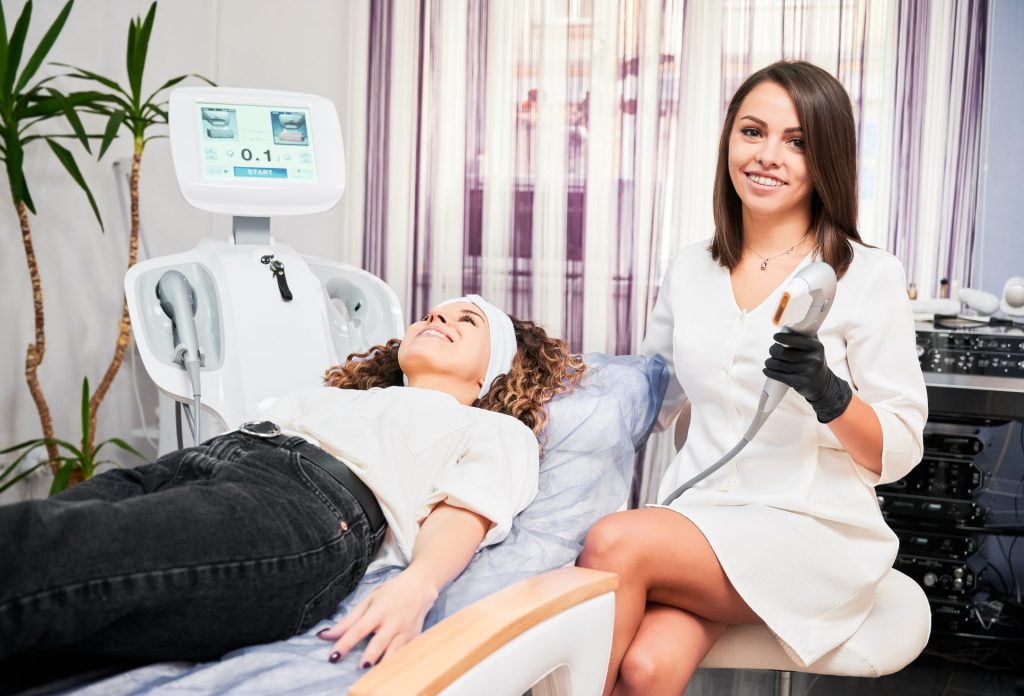
A med spa medical director is the licensed physician who holds ultimate clinical responsibility for the treatments a med spa provides. That includes injectables, laser and energy-device procedures, chemical peels, and any prescription-based skincare or weight-loss protocols offered by the spa.

The role centers on oversight, not hands-on treatment. You approve clinical protocols, review patient charts, confirm Patient-Specific Orders, and supervise the nurse practitioners, physician assistants, or registered nurses who deliver most of the care. When a state requires a Good Faith Exam before certain procedures, you are the physician responsible for it.

Medical Director vs. Chief Medical Officer: Different Roles

A chief medical officer typically works inside a hospital system or large healthcare organization, setting clinical strategy across departments and reporting to an executive team. A med spa medical director works at the level of a single practice or a small group of locations. The scope is narrower, and the accountability is more direct. You are named on state filings as the physician responsible for that specific spa’s compliance, and state medical boards hold you to that standard.

Qualifications Required to Become a Medical Director

Every medical director candidate needs an active, unrestricted MD or DO license in the state where the med spa operates. Out-of-state licenses do not qualify, and a license carrying any board action or restriction disqualifies you in most jurisdictions. Licensure only clears the entry point, and med spas and placement services then screen candidates against a specific set of qualifications before they will place them:

  • Board Certification: Certification in a specialty relevant to aesthetic medicine, such as dermatology or plastic surgery, significantly strengthens your candidacy.
  • Aesthetic Experience: Demonstrated experience with injectables, laser treatments, or cosmetic procedures counts even if it came from a different practice setting.
  • Regulatory Knowledge: A working knowledge of your state’s corporate practice of medicine rules and delegation requirements is expected before you take the role.
  • Supervision Comfort: You need to be comfortable supervising nurse practitioners and physician assistants through collaborative agreements.
  • DEA Registration: An active DEA registration is required if the practice involves weight-loss medications, hormone therapy, or other controlled substances.

Meeting every item on this list does not guarantee placement, but missing more than one typically removes a candidate from consideration before a med spa reviews the rest of the application.

Does Your Specialty Matter for Med Spa Medical Direction?

Specialty relevance matters more than the specific degree behind your name. Dermatologists and plastic surgeons have the clearest fit, since their training overlaps directly with the procedures a med spa performs. That overlap makes them the preferred candidates in competitive, high-acuity markets.

Family medicine, internal medicine, and emergency medicine physicians also fill a large share of medical director roles, particularly through supplemental or part-time arrangements. Hospital-affiliated physicians looking for additional income outside their primary practice make up a meaningful part of this pool. If your specialty falls outside dermatology or plastic surgery, expect med spas to ask about specific aesthetic training, such as injectable certification courses or laser safety credentials, before they consider your application ready.

Responsibilities of a Med Spa Medical Director

Once placed, the job does not stop at signing a contract. State medical boards hold the named medical director accountable for every treatment performed under that license, not just for the terms written into the agreement. That accountability translates into a defined set of recurring duties rather than a one-time signature:

  • Protocol Approval: You approve and update clinical protocols for every service line the spa offers.
  • Chart Review: You review patient charts on a defined schedule, not on an as-needed basis.
  • Clinical Availability: You remain reachable for complication management and clinical questions during business hours.
  • Site Visits: You conduct periodic site visits as required by state law.
  • Delegation Compliance: You confirm that delegation agreements with NPs, PAs, and RNs match current state scope-of-practice rules.

Skipping any one of these duties is what turns a legitimate medical director into a nominal one in the eyes of a state investigator, regardless of how the contract is worded.

Chart Review Commitment: What to Expect

Chart review is where oversight becomes documentation, and documentation is what state medical boards check first during an investigation. Expect a defined cadence rather than a vague promise of “regular” review. Many arrangements specify monthly chart review at a minimum, with more frequent review required in states with stricter aesthetic-practice supervision rules or for higher-risk services like weight-loss prescribing.

Boards investigating a med spa look for chart review logs, documented site visits, and a real communication trail between the medical director and the clinical team. A director who cannot produce that trail is treated as a nominal, or “ghost,” director, and both the physician and the practice face consequences for it. Building the habit of logging every review from day one protects your license and the spa’s compliance standing.

How to Find Medical Director Opportunities

Physicians typically find medical director positions through three channels: direct outreach to med spa owners, aesthetics conferences and specialty societies, and dedicated placement services built specifically for this role.

Direct outreach works, but it is slow. You are competing against physicians who already have a relationship with the practice, and vetting a spa’s compliance posture on your own takes real due diligence. Conferences put you in the room with practice owners actively looking, but the timeline to placement still depends on chance encounters and follow-up.

Why Placement Services Are the Fastest Path

A placement service pre-screens practices for compliance basics, defines the scope of oversight, and sets compensation at fair market value before introducing you. Direct outreach and conference networking skip that vetting, so you audit each practice’s compliance history yourself, often over several weeks.

Medical Director Co. places physicians in as little as 24 hours. Plans start at $799 per month with no setup fees, and the agreement terms, delegation structure, and chart review expectations are defined before the introduction happens.

Stop Chasing Leads. Start Getting Matched.

Medical Director Co. connects you with compliant med spa partnerships in as little as 24 hours, no setup fees required.

FAQ

What degree do you need to be a medical director?

You need an MD or DO with an active, unrestricted license in the state where the med spa operates. Board certification is not always legally required, but it is strongly preferred and improves your placement options significantly.

How much does a medical director make at a med spa?

Compensation varies widely based on state, scope of oversight, and how hands-on the role is. A part-time, retainer-based arrangement pays differently from a full-time role with on-site clinical duties, and fair market value compensation depends on the specific responsibilities in your agreement rather than a fixed industry number.

Can I be a medical director while in active clinical practice?

Most med spa medical director roles are structured as part-time or supplemental positions for exactly this reason. Physicians filling them, including hospital-affiliated and full-time clinical physicians, take them on alongside existing practice rather than in place of it.

How do I get my first medical director position?

Start by confirming your specialty background and any aesthetic-specific training you already have. Then decide whether you want to pursue direct outreach or work with a placement service that can match you against pre-vetted practices, which shortens the path considerably for a first-time director.

Building the Compliance Record Before You’re Placed

The physicians who move fastest into this role treat licensure, specialty relevance, and chart-review documentation as prerequisites, not as paperwork to catch up on after signing. A pre-vetted placement service removes the compliance vetting you would otherwise have to prove on your own, which is the main reason it outpaces direct outreach. Confirm your specialty fit and documentation habits before you apply, not after a state board asks for them.

Get your med spa licensed the right way.

Medical Director Co. places compliant medical directors in 24 hours — no setup fees.

bolton-harris

Bolton M. Harris, J.D.

is a seasoned attorney with a formidable background in criminal law and a focus on healthcare law and compliance. As the in-house legal counsel at Medical Director Co., Harris brings a unique blend of prosecutorial experience and regulatory expertise to support healthcare professionals across Texas. Her career spans roles as a prosecutor in multiple counties and now as a trusted advisor on the legal intricacies of medical practice operations.

Related Articles

Hire a Medical Director or
Collaborating Physician Today

Scroll to Top

Get Matched Today
and Save $200

We'll contact you within 30 minutes.

Select your clinic type and we’ll match you with the right physician — fast.

Medspa/Aesthetics

Weight Loss

IV/Wellness

Telehealth

Other

Your clinic type:

Medspa/Aesthetics
Change Clinic Type

You're on your way!

We received your request for a physician.
Our team will contact you soon.