Collaborating Physician vs Medical Director: What’s the Difference?
Table of Contents
A collaborating physician and a medical director are not interchangeable roles, and choosing the wrong one can leave a med spa out of compliance. While both provide physician oversight, they differ in their responsibilities, legal authority, and how state laws define their role within a practice. Some states distinguish between the two positions, while others allow one physician to fulfill both responsibilities. Understanding these differences before opening or expanding a med spa helps you determine whether your practice needs a collaborating physician, a medical director, or both.
Key Takeaways
A collaborating physician primarily oversees delegated medical procedures, while a medical director oversees the clinical operations of the entire practice
The biggest differences involve physician oversight responsibilities, liability, and how state law defines each role
Depending on your state’s regulations, your med spa may need a collaborating physician, a medical director, or both
Some states distinguish between the two roles, while others allow one physician to fulfill both responsibilities.
Medical Director Co. helps med spa owners identify the physician oversight they need and matches qualified collaborating physicians and medical directors within 24 hours
Get the Right Physician the First Time
Avoid compliance mistakes with physician matching tailored to your state.
Defining Collaborating Physician vs Medical Director
Although collaborating physicians and medical directors both provide physician oversight, their responsibilities are not identical. Understanding what each physician does is the first step toward determining which role your practice requires.
In many states, the difference depends on how physician oversight is defined within medical practice acts, nurse practitioner collaboration rules, and medical spa regulations. In other states, the same physician may legally perform both functions.
What Is a Collaborating Physician?
A collaborating physician is a licensed MD or DO who provides physician oversight for healthcare providers practicing under state collaboration or delegation requirements. Their role focuses primarily on supervising delegated medical activities rather than managing the entire medical practice.
Depending on state law, a collaborating physician may:
Help ensure providers practice within their legal scope.
For med spas, collaborating physicians commonly oversee injectable treatments, laser procedures, prescription-based therapies, and other medical services delegated to qualified clinical staff.
What Is a Medical Director?
A medical director is the physician responsible for overseeing the clinical operations of the medical practice or facility. Rather than supervising one provider, the medical director establishes clinical standards that apply across the entire organization.
Responsibilities commonly include:
Approving clinical policies and procedures.
Reviewing treatment protocols.
Overseeing quality assurance initiatives.
Monitoring patient safety practices.
Providing physician leadership for the practice.
Supporting regulatory compliance.
In many med spas, the medical director serves as the physician ultimately responsible for how medical services are delivered throughout the practice.
Key Differences in Duties and Liability
Because both roles involve physician oversight, many med spa owners assume they perform the same job. In reality, the biggest differences involve the scope of responsibility, the type of oversight provided, and how state law defines each position.
The comparison below highlights the practical distinctions most owners should understand before hiring a physician.
Category
Collaborating Physician
Medical Director
Primary Function
Oversees delegated medical procedures and collaborating providers
Oversees the clinical operation of the entire practice
Generally limited to delegated responsibilities and applicable state law
Often broader because of responsibility for overall clinical operations
State Requirement Type
Collaboration or delegation requirements
Medical spa regulations or physician oversight requirements
Common Practice Settings
Nurse practitioners, physician assistants, med spas
Med spas, aesthetic clinics, outpatient medical practices
Typical Monthly Cost
Varies by state and oversight responsibilities
Varies by state and oversight responsibilities
Available Through Medical Director Co.
Yes
Yes
The most important difference is that a collaborating physician primarily supports providers performing delegated medical care, while a medical director oversees the broader clinical operation of the practice. Depending on your state’s regulations, one physician may legally perform both functions, or separate physician oversight arrangements may be required.
If you would like a broader overview of physician oversight, explore our guide to collaborating physician services.
When You Need Collaborating Physician vs. Medical Director
The answer depends on several factors, including your state’s regulations, your ownership structure, the types of treatments you offer, and which licensed professionals perform those procedures. Rather than assuming every med spa follows the same model, use the decision framework below as a general guide.
Your Situation
Collaborating Physician
Medical Director
Nurse practitioner practicing under a collaboration requirement
✓
Depends on state
Med spa offering delegated injectable or laser procedures
✓
Often required
State requires physician oversight of the facility
Depends
✓
Practice relies on physician delegation agreements
✓
Depends
Med spa operating in a strict CPOM state
Often
Often
Multi-provider aesthetic clinic with multiple treatment protocols
May be required
✓
As a general guideline:
You may only need a collaborating physician when state law focuses primarily on collaboration or delegation requirements for nurse practitioners, physician assistants, or other qualified providers.
You may only need a medical director when physician oversight applies at the facility level without separate collaboration requirements for individual providers.
You may need both when state law requires physician collaboration for delegated procedures while also requiring physician leadership over the clinical operation of the med spa.
Because physician oversight laws differ from one state to another, there is no single answer that applies nationwide. Reviewing your state’s requirements before launching or expanding your practice can help you avoid compliance issues, unnecessary restructuring, and delays in opening your med spa.
How Medical Director Co. Handles Collaborating Physician and Medical Director
Medical Director Co. simplifies physician placement by helping med spa owners identify the appropriate oversight model based on their state’s regulations. Rather than spending weeks searching independently, practices receive guidance throughout the placement process, from physician matching to agreement preparation.
The placement process follows four straightforward steps.
Step 1: Submit Your Match Request
The process begins by gathering information about your practice, including your location, ownership structure, services offered, and physician oversight needs. This information helps determine whether your practice requires a collaborating physician, a medical director, or a physician who can legally fulfill both roles under your state’s regulations.
Step 2: Physician Matching
Medical Director Co. identifies physicians licensed in your state whose experience aligns with your practice and the services you plan to offer. Rather than relying solely on physician availability, the matching process considers factors such as state licensure, aesthetic medicine experience, and oversight responsibilities. Many practices receive a physician match within 24 hours.
Step 3: Attorney-Reviewed Agreements
Once a physician has been selected, collaboration agreements and related documentation are prepared based on your state’s requirements. Medical Director Co.’s in-house healthcare attorney, Bolton Harris, J.D., reviews these agreements to help ensure they accurately reflect the physician’s responsibilities, applicable delegation requirements, and current state regulations.
Step 4: Physician Oversight Begins
After the agreement has been executed, physician oversight begins according to the terms established for your practice. Depending on your state’s requirements, this may include protocol review, chart audits, standing orders, delegation oversight, and ongoing clinical collaboration. Medical Director Co. also provides continued compliance support as your practice grows or your oversight needs change.
Why Med Spa Owners Choose Medical Director Co.
The quality of physician vetting, the accuracy of legal documentation, and the level of ongoing compliance support can all influence how smoothly your med spa operates after opening. Medical Director Co. combines physician placement with compliance-focused support designed specifically for medical spas and aesthetic clinics.
Key differentiators include:
Flat-rate pricing of $799 per month: Predictable monthly pricing without unexpected placement or administrative fees.
No setup fees: Practices can begin the placement process without paying separate onboarding costs.
No long-term contracts: Clients have greater flexibility if their business needs change over time.
Physicians pre-vetted for aesthetic medicine: Physicians are matched based on state licensure, physician oversight requirements, and experience relevant to aesthetic practices.
Nationwide physician network: Medical Director Co. helps connect practices with qualified physicians across multiple states while accounting for state-specific regulations.
Attorney-reviewed agreements: Collaboration agreements are reviewed by in-house healthcare attorney Bolton Harris, J.D., to help ensure they align with applicable state requirements.
Ongoing compliance support: Physician oversight needs can evolve as a practice grows, adds services, or responds to regulatory changes. Continued support helps practices maintain compliant oversight beyond the initial physician placement.
Rather than simply introducing physicians, Medical Director Co. helps med spa owners establish a physician oversight structure designed to support both regulatory compliance and long-term practice operations.
Ready to Secure Physician Oversight?
Get matched with a qualified physician in as little as 24 hours.
What is the difference between a collaborating physician and a medical director?
A collaborating physician primarily oversees delegated medical procedures performed by qualified healthcare providers, while a medical director oversees the broader clinical operations of the practice. Depending on state law, one physician may perform both roles, or separate physician oversight arrangements may be required.
Can one person serve as both a collaborating physician and medical director?
Some states allow one physician to fulfill both responsibilities if all applicable legal and regulatory requirements are met. Other states distinguish between the two roles or assign different responsibilities to each position.
Which role carries more liability?
Liability depends on state law, the physician’s contractual responsibilities, and the services offered by the practice. In many cases, medical directors assume broader responsibility because they oversee the clinical operation of the facility rather than only delegated medical activities.
Does my state distinguish between the two roles?
It depends. Some states clearly distinguish between collaborating physicians and medical directors, while others use different terminology or combine physician oversight responsibilities. Reviewing your state’s regulations is the best way to determine which role applies to your practice.
Can a nurse practitioner be a collaborating physician?
A collaborating physician must be a licensed physician, typically an MD or DO, who meets the supervision or collaboration requirements established by state law. While nurse practitioners may practice under collaborative agreements in certain states, they do not serve as collaborating physicians.
Choosing the Right Physician Oversight for Your Med Spa
Selecting the appropriate physician oversight structure begins with understanding your state’s requirements rather than assuming every med spa follows the same model. While collaborating physicians and medical directors both play important roles in maintaining compliance, they are not always interchangeable. Medical Director Co. helps med spa owners determine which physician arrangement their practice requires and connects them with qualified physicians through a streamlined placement process, often within 24 hours.
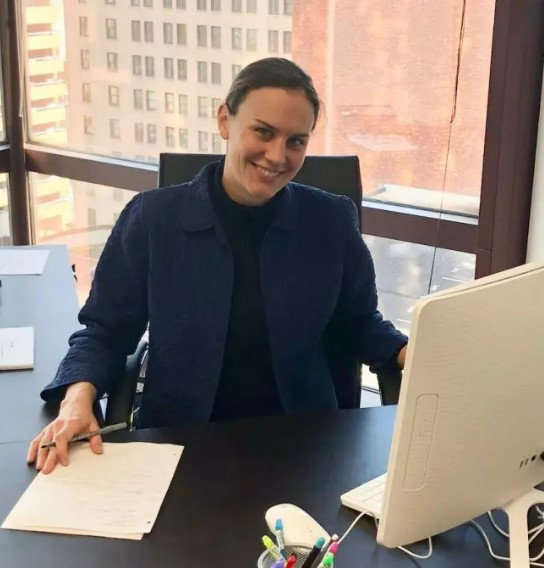
Bolton M. Harris, J.D., is a seasoned attorney with a formidable background in criminal law and a focus on healthcare law and compliance. As the in-house legal counsel at Medical Director Co., Harris brings a unique blend of prosecutorial experience and regulatory expertise to support healthcare professionals across Texas. Her career spans roles as a prosecutor in multiple counties and now as a trusted advisor on the legal intricacies of medical practice operations.
Education & Early Career
Bolton Harris completed her undergraduate studies at Southern Methodist University (SMU) in 2013. During her time at SMU, she was not only a dedicated student but also a competitive athlete on the university’s women’s swimming team. She went on to earn her Juris Doctor from Texas A&M University School of Law in 2016 and became a member of the Texas Bar that same year. Armed with a strong academic foundation and discipline honed as a student-athlete, Harris embarked on a career in criminal law immediately after law school.
Prosecutorial Experience in Texas
Bolton Harris began her legal career in public service as a criminal prosecutor. She served as an Assistant District Attorney in multiple jurisdictions, where she quickly rose through the ranks and handled a broad spectrum of cases. Some highlights of her prosecutorial career include:
Assistant District Attorney, Dallas County, Texas: Prosecuted a high volume of criminal cases in one of the state’s busiest DA offices, gaining extensive trial experience in both misdemeanor and felony courts.
Assistant District Attorney, Ellis County, Texas: Continued to hone her courtroom advocacy skills, known for meticulous case preparation and a tenacious pursuit of justice on behalf of the community.
Assistant District Attorney, Navarro County, Texas: Broadened her legal expertise by handling diverse criminal matters in a smaller county, working closely with law enforcement and community leaders to uphold the law.
Through these roles, Harris built a reputation for being a tough but fair advocate. She brought numerous cases to trial and developed an in-depth understanding of the criminal justice system. This distinguished prosecutorial background laid a strong foundation for the next phase of her career in the private sector.
Healthcare Law & Compliance at Medical Director Co.
After her tenure as a prosecutor, Harris shifted her focus to healthcare law, applying her legal acumen to the medical field. She recognized that the same attention to detail and tenacity that served her in criminal law could benefit healthcare providers navigating complex regulations. Embracing this new direction, Harris became well-versed in the intricate laws governing medical practices – from licensing requirements to patient safety and privacy standards – and is passionate about helping practitioners stay compliant.
In her current role as the in-house attorney for Medical Director Co., Bolton Harris oversees all legal and compliance matters for the organization and its clients. Medical Director Co. is a nurse-owned firm that connects nurse practitioners (NPs), physician assistants (PAs), and registered nurses with qualified medical directors and collaborating physicians, offering fast placements and comprehensive compliance support for healthcare practices. Harris ensures that each of these partnerships and clinical ventures adheres to all applicable state and federal laws. She is responsible for drafting and reviewing collaborative practice agreements, advising on regulatory requirements, and providing ongoing legal counsel as clients establish and grow their clinics. Drawing on her prosecutorial eye for risk management, Harris proactively identifies potential legal issues and addresses them before they escalate, giving healthcare professionals peace of mind.
Bolton M. Harris’s multifaceted expertise – spanning high-stakes courtroom litigation to detailed healthcare compliance – makes her a formidable legal ally. Whether advocating in front of a jury or guiding a medical practice through regulatory hurdles, she remains committed to the highest standards of the legal profession. Her blend of courtroom-tested skill and healthcare law knowledge ensures that clients of Medical Director Co. receive elite-level counsel and steadfast protection in an ever-evolving legal landscape.
Bolton M. Harris, J.D.
is a seasoned attorney with a formidable background in criminal law and a focus on healthcare law and compliance. As the in-house legal counsel at Medical Director Co., Harris brings a unique blend of prosecutorial experience and regulatory expertise to support healthcare professionals across Texas. Her career spans roles as a prosecutor in multiple counties and now as a trusted advisor on the legal intricacies of medical practice operations.