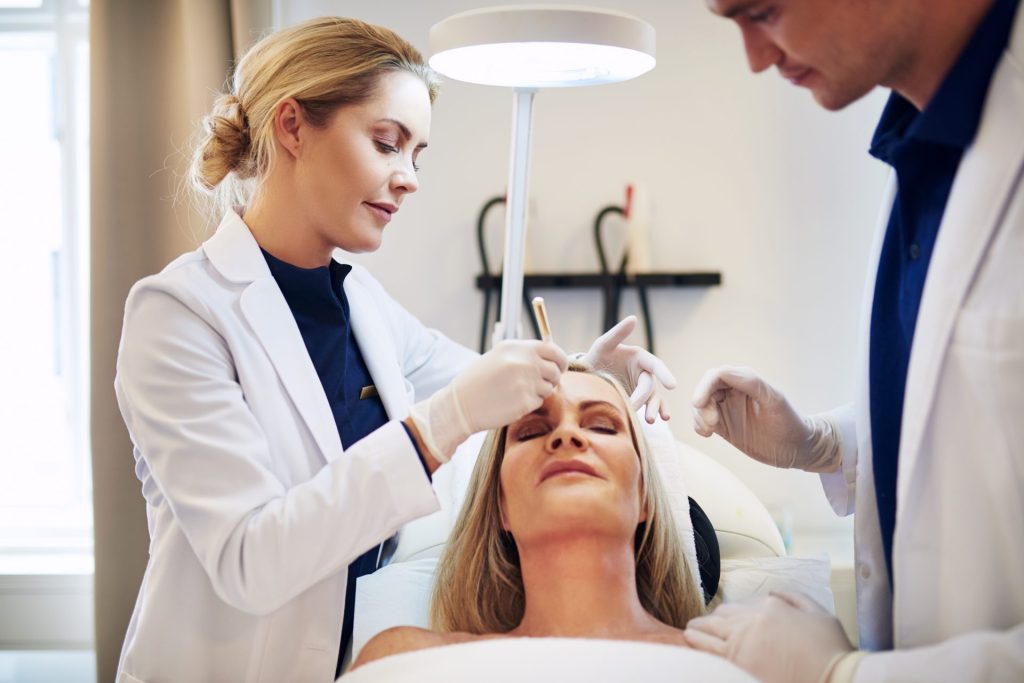

Can a Good Faith Exam Be Done Virtually? The Short Answer

Table of Contents

A good faith exam can be done virtually in most states, but only through live, synchronous video with a provider who holds prescriptive authority. A form, a one-way message, or a phone call without video doesn’t meet that standard, no matter how detailed the questions are. Some states and treatment types still require an in-person good faith exam, so confirm the specifics before treating virtual as the default.

Key takeaways

  • Live video with a qualified provider generally satisfies the virtual good faith exam standard in most states. (Jump to Section)
  • Forms, asynchronous messages, and phone-only calls generally don’t qualify on their own. (Jump to Section)
  • A handful of states or treatment types may still require an in-person exam, so confirm current rules before relying on a virtual-only process. (Jump to Section)

What Qualifies

A compliant virtual good faith exam depends on four elements working together: live video, a qualified provider, correct-state licensing, and complete documentation. Missing any one of them turns the exam into a liability instead of a valid clearance. State boards evaluate all four when reviewing a virtual good faith exam.

  • Provider type: A physician (MD or DO), a nurse practitioner, or a physician assistant can conduct the exam, depending on state rules.
  • Licensing location: The provider must hold an active license in the state where the patient is physically located during the call, not just where the practice is based.
  • Clinical scope: The exam must cover medical history, current medications, contraindications, and the specific treatment being cleared.
  • Documentation: The visit must be recorded using the same SOAP note standard used for in-office exams: history, findings, assessment, and plan.

For practices operating in more than one state, matching each patient to a correctly licensed provider is usually the harder compliance problem to solve. A provider licensed in one state can’t legally clear a patient physically located in another. Check the state-specific virtual good faith exam requirements before treating patients across state lines.

What Doesn’t Qualify

Three formats fail the good faith exam standard on their own: static forms, asynchronous messaging, and audio-only phone calls. Each one skips the same requirement: a live, real-time interaction between the patient and a licensed provider. State medical and nursing boards reject all three regardless of how much information they collect.

  • Static intake forms: A form doesn’t establish a provider-patient relationship because there’s no real-time interaction to assess.
  • Asynchronous messaging: A chat or messaging exchange fails because the provider reviews answers after the fact instead of evaluating the patient live.
  • Phone calls without video: An audio-only call fails because the provider can’t visually confirm identity or assess visible contraindications.

Some vendors sell “virtual good faith exam” products built entirely on form submissions or phone screens, and practices assume the compliance risk when they use them. If a state board audits the good faith exam and it doesn’t hold up, the liability lands on the practice that treated the patient.

The Exceptions Worth Checking

State rules on good faith exams vary across three areas: delegation authority, telehealth permissibility, and renewal frequency. These rules change more often than most practices track, and a state that was virtual-friendly last year may not be this year. Confirming current requirements before treatment is not optional.

  • Delegation authority: States differ on which provider types can perform the exam and under what supervision level.
  • Telehealth permissibility: Some states allow virtual exams for aesthetic treatments but still require in-person exams for certain medical therapies.
  • Renewal frequency: States set different timelines for how often a good faith exam must be repeated to remain valid.

Practices operating in more than one state carry more exposure than single-location practices, since a rule change in one state doesn’t apply anywhere else. Confirm current requirements directly with each state’s medical or nursing board before expanding into it, and revisit that confirmation on a set schedule rather than assuming last year’s rules still apply. The American Med Spa Association’s guide on using telemedicine for the good faith exam is a useful starting reference for how boards have approached this so far.

How Medical Director Co. Handles Virtual Exams Correctly

How Medical Director Co. Handles Virtual Exams Correctly

Telehealth has made it easier than ever to scale a med spa across state lines, but it’s also made it easier to get the good faith exam wrong, since a provider licensed in one state can’t simply evaluate a patient sitting in another without running into compliance problems. Getting this right means matching the right provider to the right state, every single time, and building that match into the workflow so it happens automatically rather than relying on someone remembering to check. Here’s how Medical Director Co. makes sure your virtual exams hold up.

  • State-Matched Provider: Each practice is matched with a physician or qualified provider licensed in the specific state where the patient is located.
  • Integrated Scheduling: The live video exam is scheduled directly into the practice’s existing intake workflow, so it doesn’t require a separate manual process.
  • Same Clinical Standard: The provider conducts the good faith exam over synchronous video and covers the same clinical checklist used in an in-person visit.
  • Complete Documentation: The visit is documented in a SOAP note before the treatment is cleared, creating the same clinical record an in-person exam would produce.
  • Built-In Regulatory Knowledge: Because the provider already knows that state’s delegation and supervision rules, the practice doesn’t have to research them separately or risk clearing a patient under the wrong state’s requirements.

Stop Guessing at State Rules

Get matched with a licensed provider who already knows your state's requirements.

FAQ

Does a virtual good faith exam need to include video?

Live, synchronous video is required for a virtual good faith exam to meet state standards. Audio-only phone calls and text-based intake forms don’t establish the real-time, face-to-face assessment that state medical and nursing boards expect. A provider needs to see the patient to confirm identity and check for visible contraindications, which no form or phone call can replace.

Are there states that still require in-person exams?

A small number of states still require an in-person exam for specific treatment categories, regardless of how the initial screening is conducted. These rules vary by state medical board and change periodically as telehealth policy evolves. Confirm current requirements directly with the relevant board before treating a virtual exam as sufficient for a given treatment or location.

Can the same provider perform both virtual and in-person exams?

The same provider can perform both formats, provided they hold prescriptive authority and are licensed in the state where the patient is physically located at the time of the exam. Licensing and supervision requirements stay the same regardless of format. Practices that offer both options typically use the same provider pool for consistency in documentation and clinical judgment.

Does a virtual exam need to be documented differently?

A virtual exam follows the same SOAP note standard used for an in-person exam, covering history, findings, assessment, and plan. The record has to be completed at the time of the visit, not reconstructed afterward. It should include enough clinical detail to justify the treatment decision on its own, without relying on the format to explain any gaps.

Is a virtual exam considered lower quality than an in-person one?

Good faith exam quality depends on video clarity and the thoroughness of the provider’s evaluation, not on whether the visit happens in person or by video. A rushed five-minute exam carries the same risk whether it’s virtual or in-person. The format doesn’t set the standard of care; the provider’s diligence during the exam does.

Meeting the Virtual Good Faith Exam Standard Without Guesswork

A good faith exam meets the virtual standard when it happens over live video with a provider who holds prescriptive authority and documents it to the same level as an in-person visit. It fails the moment a form, a chat, or a phone call substitutes for that interaction. Confirm your state’s specific rules for delegation, telehealth permissibility, and renewal frequency, then route every good faith exam through a provider who already meets them.

Don't Let a Bad Exam Sink Your Practice

Talk to a Medical Director and get your virtual exam process audit-proof.

bolton-harris

Bolton M. Harris, J.D.

is a seasoned attorney with a formidable background in criminal law and a focus on healthcare law and compliance. As the in-house legal counsel at Medical Director Co., Harris brings a unique blend of prosecutorial experience and regulatory expertise to support healthcare professionals across Texas. Her career spans roles as a prosecutor in multiple counties and now as a trusted advisor on the legal intricacies of medical practice operations.

Related Articles

Hire a Medical Director or
Collaborating Physician Today

Scroll to Top

Get Matched Today
and Save $200

We'll contact you within 30 minutes.

Select your clinic type and we’ll match you with the right physician — fast.

Medspa/Aesthetics

Weight Loss

IV/Wellness

Telehealth

Other

Your clinic type:

Medspa/Aesthetics
Change Clinic Type

You're on your way!

We received your request for a physician.
Our team will contact you soon.