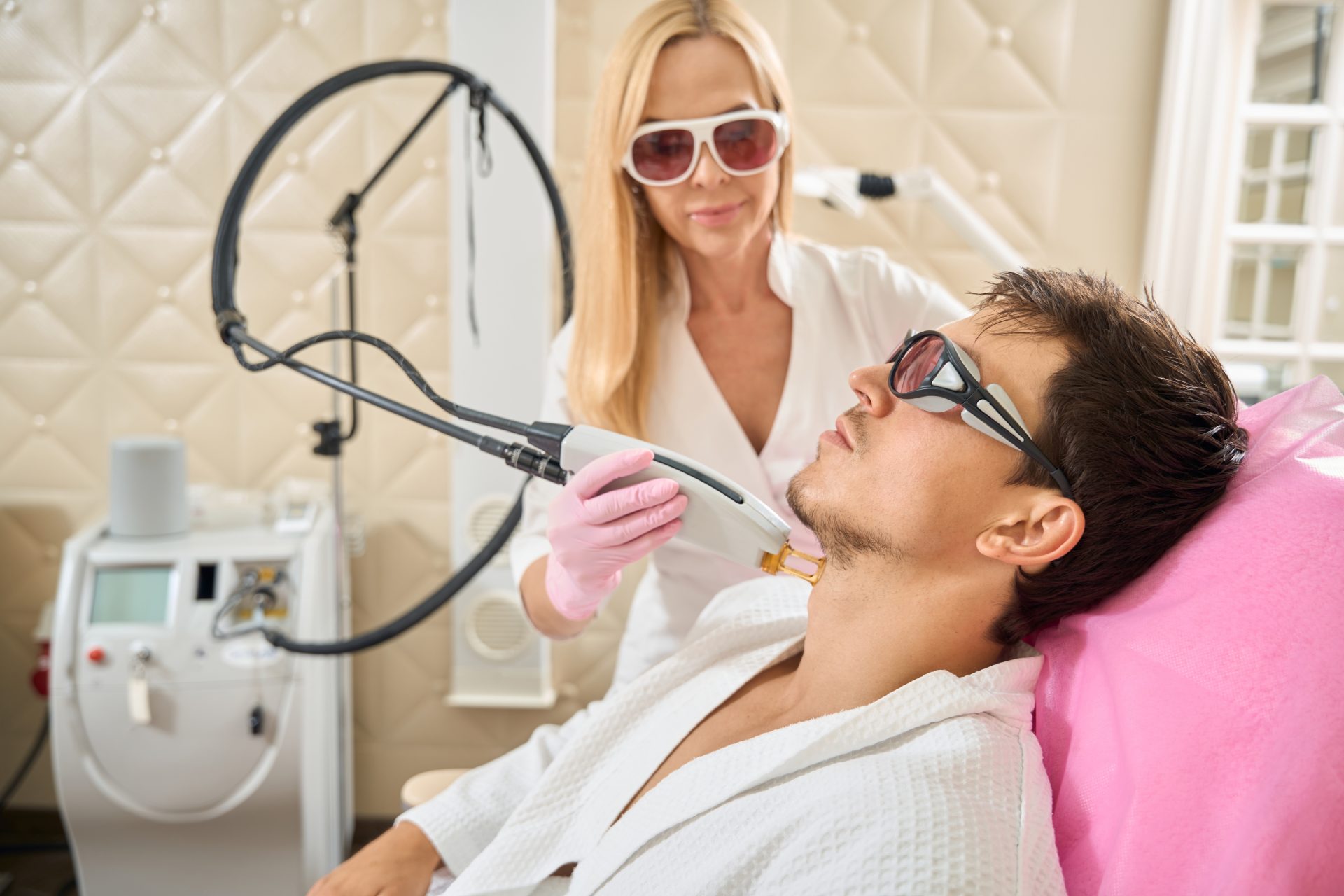
Laser treatment compliance covers three separate requirements: the good faith exam, operator training, and device-specific delegation protocols. Missing either of the last two exposes a practice to board discipline, malpractice claims, and unlicensed-practice allegations, regardless of how well the exam is handled. Training and delegation requirements vary by state and by device. Each one carries its own rules, and a practice needs to meet all three to close the gap.
Key takeaways
- Device classification determines the exam requirement, the operator requirement, and the delegation requirement all at once. (Jump to Section)
- Operator training requirements vary by state and by device type, so a rule that applies in one state may not apply in the next. (Jump to Section)
- A delegation protocol should name the exact device a staff member is authorized to use, not “laser treatments” as a general category. (Jump to Section)
Device Classification Drives Everything
Every laser used in a med spa is an FDA-regulated medical device, and its classification sets who can operate it, what training the operator needs, and how a physician can delegate its use. Most aesthetic lasers fall into Class IIIb or Class IV, the FDA’s highest-hazard categories for devices that can cause eye and skin injury from direct or reflected beams. The FDA’s device classification database lists the classification for approved devices.
- Classification sets operator qualification: The device’s class determines which staff members are legally permitted to run it.
- Classification sets training depth: Higher-hazard classes generally require more rigorous, device-specific operator training.
- Classification sets delegation limits: A physician can only delegate a device as far as its classification and state rules allow.
- Classification belongs in the file: Every operator record and delegation protocol should list the confirmed FDA classification for that specific device.
A practice that skips this step can’t accurately staff its treatment rooms or build a delegation protocol that holds up under review, since both depend on knowing exactly what class of device is in the room. Confirming classification before a device enters service is the starting point for the good faith exam requirement and everything that follows it.
Operator Training Requirements
Operator training requirements differ by state, and in several states, they differ by device within the same state. Texas, Arizona, Florida, and California each regulate laser operator qualification through a completely different legal structure. Each model changes who can legally operate a given device and under what supervision.
- Texas uses a tiered certificate system: The Texas Department of Licensing and Regulation moves operators through four levels, from Apprentice-in-Training to Technician to Senior Technician to Professional, with supervised procedure counts required at each level and a consulting physician on file for every facility.
- Arizona sets a fixed training-hour minimum: The state requires an 88-hour program split between didactic and clinical hours, and it separates indirect supervision for hair removal from direct, in-room supervision for other cosmetic laser procedures performed on the same device.
- Florida regulates through a hair-removal-specific license: Laser and light-based hair removal fall under the state’s electrologist license rather than a stand-alone laser certificate, and that license does not extend to laser tattoo removal, since physician delegation cannot expand a license past its defined scope.
- California regulates through existing medical credentials: There is no separate state laser license, so eligibility runs through a credential a person already holds, such as a registered nurse or physician assistant license, operating under a physician’s delegation and written protocols.
These four models show why training and certification rules cannot be assumed at a national level. Confirming the operator model for the specific state where treatment happens is what makes a laser hair removal consultation protocol enforceable.
Delegation Has to Be Device-Specific
A delegation protocol that simply says “laser treatments” is one of the most common gaps a compliance review turns up. Florida and Arizona both show why a generic protocol fails under review. A device-specific protocol closes that gap.
- Florida’s electrologist scope shows the limit of a license-based delegation: The license, and any protocol built on it, covers hair removal only, so delegating laser tattoo removal to the same electrologist is invalid regardless of that operator’s training on the device.
- Arizona’s supervision split shows the limit of a procedure-based delegation: State rule permits indirect supervision for hair removal but requires direct, in-room supervision for other cosmetic laser procedures performed by the same operator on the same device.
- A protocol written for one procedure doesn’t transfer to another: The operator and physician can stay identical while the supervision requirement changes based on the specific procedure being performed.
- The fix is naming specifics: Every delegation protocol should name the exact device, model, and procedure it covers rather than referring to “laser treatments” as a category.
A protocol built this way also has a shelf life. Reviewing each delegation protocol on a set schedule keeps the practice’s paperwork aligned with what’s actually happening in the treatment room.
How Medical Director Co. Supports Full Laser Compliance, Not Just the Exam
Medical Director Co. covers all three compliance requirements through one process. First, a collaborating or supervising physician is matched to your practice to establish the oversight relationship your state requires, and that physician conducts documented, recurring reviews rather than signing a single form and stepping away. From there, the compliance team builds a device-specific delegation protocol for each laser in your practice, naming the exact device, model. The team also assembles the training documentation each operator needs based on current state rules, so the file for that operator matches what the state actually requires.
FAQ
Is passing the good faith exam requirement enough for laser treatment compliance?
The good faith exam alone doesn’t cover full compliance. Operator training and device-specific delegation protocols are separate legal requirements. A practice can pass the good faith exam and still fall out of compliance if training records or delegation protocols are missing or outdated.
Do laser operators need special certification?
Certification requirements depend on the state and the device. Texas requires a tiered state certification specific to laser hair removal, while California ties authorization to an existing medical license, such as an RN or PA credential, operating under physician delegation. Confirm the current rule for the specific device and state before assigning any operator.
Can one delegation protocol cover every laser device in a practice?
A single generic protocol is one of the most common compliance gaps a review turns up. Different laser devices carry different FDA classifications, risk profiles, and state-specific training requirements, so a protocol written for one device rarely covers another safely. Naming the exact device, model, and procedure in each protocol is what holds up under audit.
Who’s responsible for confirming device classification?
The supervising or collaborating physician holds this responsibility, working alongside the practice to confirm classification for every laser device offered. The FDA’s device classification database lists it, and that classification should sit at the top of every operator training file and delegation protocol.
What’s the most common laser treatment compliance gap in med spas?
The most common gap is treating every laser device as interchangeable and applying one generic training and delegation protocol across equipment with different classifications and risk profiles. A practice that trains and delegates as if every laser is the same device is exposed.
Closing the Gaps Between the Exam, Training, and Delegation
Laser treatment compliance rests on three requirements: device classification, operator training, and device-specific delegation. A practice that builds on only one or two of these is still subject to board discipline, malpractice claims, and allegations of unlicensed practice. State rules on training and delegation change often enough that a protocol written two years ago may no longer match the current requirements in that state. So, confirm the classification for every device in the treatment room, then build training and delegation records based on that state’s current rule.