
You receive your Franchise Disclosure Document, review the operational requirements, and begin planning your clinic launch. Then you reach a section that says you must retain a medical director. The requirement is clear enough, but the details usually are not. What qualifications does the physician need? What documents are required? How does the arrangement need to be structured? And where are you supposed to find the right physician in the first place?
This confusion sits at the center of many franchise agreement medical director requirements. Most franchise systems treat physician oversight as a mandatory compliance obligation, but they rarely provide detailed instructions on how to fulfill it. That is not an oversight. It is a structural feature of how franchise systems handle clinical compliance. The franchisor’s responsibility is to disclose the requirement. The franchisee’s responsibility is to implement it correctly.
The challenge is that fulfilling the requirement involves far more than finding a physician willing to sign an agreement. It requires understanding both franchise expectations and state regulatory requirements. Medical Director Co. was built to bridge that gap, helping franchise operators turn a broad compliance mandate into a properly structured, documented, and operational medical director arrangement.
What the FDD Medical Director Language Actually Says — and What It Doesn't
FDD Requirement vs. State Law Requirement — Two Separate Obligations
One of the most common mistakes new franchisees make is assuming that satisfying the franchise agreement automatically satisfies state law. In reality, these are two separate obligations.
The medical director requirement in the franchise agreement is a contractual obligation between the franchisee and the franchisor. The medical director requirement under state law is a regulatory obligation between the clinic and the applicable medical, nursing, or healthcare licensing boards. Each operates independently and may have different standards.
A physician arrangement that satisfies the franchisor’s requirements may still fall short of state clinical oversight regulations. Likewise, a structure that technically complies with state law may not satisfy the franchisor’s operational requirements. Fulfilling both obligations requires understanding both frameworks and how they interact.
For that reason, franchise operators should consider consulting both a franchise attorney for FDD interpretation and a healthcare attorney for state-specific regulatory guidance.
If you review several franchise agreements and Franchise Disclosure Documents (FDDs) in the medical aesthetics, wellness, and healthcare-adjacent industries, you’ll notice a common pattern. The medical director requirement is usually stated clearly, but only at a high level. Most agreements require the franchisee to retain a "qualified medical director," "licensed physician," or similar healthcare professional to provide "clinical oversight" for the location.
What the documents rarely explain is what those terms mean in practice. The FDD typically does not define what makes a physician "qualified" beyond holding an active medical license. It generally does not specify what clinical oversight should include, what standing orders or Good Faith Exam (GFE) protocols are required, or what documentation demonstrates compliance. Those implementation details are usually left to the franchisee.
This ambiguity is intentional. From the franchisor’s perspective, the goal is to establish a compliance requirement without assuming responsibility for how it is fulfilled in different states and regulatory environments. The franchisor mandates the structure. The franchisee is responsible for implementing it correctly.
What Franchisors Expect But Don’t Explain
Although most franchise agreements do not spell it out, the medical director requirement is designed to accomplish several specific objectives. Franchisors generally want a licensed physician on record who can be identified to regulators, physician-authorized clinical protocols that support the services being offered, and a documented oversight structure that helps protect the brand from individual franchisee compliance failures.
They also want evidence that each franchise location is operating within the clinical governance framework established by the system. In other words, the medical director requirement is not simply about having a physician’s name attached to the business. It is about creating a documented compliance structure that supports consistency, accountability, and regulatory readiness across the network.
Understanding these expectations helps franchisees move beyond the question of "Do I have a medical director?" and focus on the more important question: "Do I have the right medical director structure?" Medical Director Co. is designed around that exact objective, helping franchisees implement physician oversight in a way that satisfies both franchise expectations and state regulatory requirements.
What Fulfilling the Medical Director Requirement Actually Requires
Element 1 — A Licensed, In-State Physician
At a minimum, a qualified medical director must hold an active, unrestricted medical license in the state where the clinic operates. This sounds straightforward, but it is one of the most common fulfillment mistakes franchise operators make. A physician licensed in another state cannot typically provide medical director services simply because they are available or experienced. Before entering any medical director arrangement, operators should verify that the physician is properly licensed in every state where oversight will be provided.
Most franchise agreements stop at the requirement itself: retain a qualified medical director and maintain physician oversight. What they rarely explain is what a properly fulfilled medical director arrangement looks like in practice.
Regardless of the franchise brand, state, or clinic model, a compliant medical director structure generally includes five core elements. Together, these elements help satisfy both the franchisor’s contractual expectations and the state’s regulatory requirements. Missing any one of them can create gaps in compliance, documentation, or clinical oversight.
Element 2 — A Properly Structured Medical Director Agreement
A physician’s willingness to serve as a medical director must be documented through a written Medical Director Agreement. The agreement should clearly define the physician’s responsibilities, compensation, availability expectations, and oversight obligations. A verbal understanding, email exchange, or generic template provides little protection if questions arise later. Both franchisors and regulators expect evidence that the relationship is real, active, and properly documented.
Element 3 — State-Specific Standing Orders
Medical directors exercise their clinical authority through standing orders and treatment protocols. These documents authorize specific procedures and establish how delegated clinical services are performed. Standing orders should reflect the services offered at the clinic and comply with the laws of the state where the clinic operates. Generic national templates that have not been reviewed and approved by an in-state physician often fail to satisfy state-specific requirements.
Element 4 — Active Chart Review and Documentation
Most states require evidence of ongoing physician involvement, not simply a physician’s name on a contract. Regular chart reviews help demonstrate that the medical director is actively supervising clinical operations. Just as important, those reviews must be documented. During a regulatory inspection, franchisor audit, or compliance review, the ability to produce a clear record of physician oversight is often as important as the oversight itself.
Element 5 — Genuine Availability for Clinical Consultation
The medical director should be available to answer clinical questions, address patient concerns, and provide guidance when issues arise. This requirement is one of the primary reasons franchise systems mandate physician oversight in the first place. A physician who is technically listed as the medical director but is routinely unreachable creates a significant compliance weakness. Effective medical director arrangements provide not only documentation, but also meaningful access to physician expertise when it is needed.
The 4 Ways Franchisees Fulfill the Medical Director Requirement Incorrectly
Failure 1: Using a Family Friend or Informal Referral With No Formal Agreement
This is the most common mistake among first-time franchise operators. A friend, colleague, or referral from another franchisee introduces a physician who agrees to "cover" the clinic. The arrangement may begin with good intentions, but there is no written Medical Director Agreement, no clearly defined oversight responsibilities, and no documentation establishing how the physician will participate in clinic operations. When an audit, inspection, or adverse event occurs, the lack of a formal structure becomes immediately apparent. Informal relationships rarely satisfy either franchise requirements or regulatory expectations.
Most franchise operators do not intentionally violate their franchise agreement or state regulatory requirements. The problem is that medical director obligations are often presented as straightforward on paper but are more complex in practice. As a result, many franchisees believe they have satisfied the requirement when important pieces of the structure are actually missing.
Failure 2: Using a National Physician Who Is Not Licensed in the Operating State
Some franchisees assume that a physician associated with a corporate network or multi-state organization can automatically provide oversight everywhere. In reality, physician licensure is state-specific. If the physician does not hold an active license in the state where the clinic operates, the arrangement may fail the state’s regulatory requirements regardless of the physician’s experience or qualifications. State-specific licensure should always be verified before relying on any medical director arrangement.
Failure 3: Treating the Medical Director as a One-Time Setup Task
Another common mistake is viewing physician oversight as something that is completed during clinic opening and never revisited. Over time, standing orders may become outdated, chart reviews may stop occurring, and new services may be added without corresponding protocol updates. A medical director relationship is not a one-time transaction. It is an ongoing operational requirement that should evolve alongside the clinic’s services, staffing, and compliance obligations.
Failure 4: Relying on the Franchisor to Validate the Arrangement
Many franchisees assume that if the franchisor has not questioned their medical director arrangement, it must be compliant. In most cases, that assumption is incorrect. Franchisors typically disclose the requirement but do not independently verify every physician agreement, standing order, or oversight process used by individual franchisees. The responsibility for proper implementation remains with the clinic owner. A franchisor’s silence should never be interpreted as confirmation that the arrangement satisfies state regulatory standards.
These failure points all stem from the same underlying issue: franchisees are expected to fulfill a medical director requirement without always receiving practical guidance on how to do it correctly. Medical Director Co. was built to solve that problem by providing physician placement, state-specific documentation, standing orders, and ongoing oversight support within a single structured framework. Instead of guessing whether an arrangement satisfies both franchise and regulatory expectations, operators receive a documented system designed to meet both.
What a Properly Fulfilled Franchise Medical Director Arrangement Looks Like in Practice
What the Medical Director Arrangement Looks Like to a State Inspector
When a state inspector reviews a properly fulfilled medical director arrangement, they find documentation that clearly demonstrates physician oversight. There is a current Medical Director Agreement covering the specific clinic location and complying with the requirements of that state. Standing orders are physician-signed, procedure-specific, and reviewed within the required timeframe. Chart review logs show regular physician involvement in patient care oversight, with dates and supporting documentation.
Staff members can identify the medical director, explain their role, and describe the process for escalating clinical questions. Contact information is readily available, and there is a documented pathway for physician consultation when needed. Each of these elements can be verified independently, which is precisely why inspectors expect to see them.
A properly structured medical director arrangement is not something that sits forgotten in a filing cabinet after the clinic opens. It is visible in the day-to-day operation of the business. The physician relationship is documented, the clinical protocols are current, and staff understand how physician oversight functions within the clinic.
In a well-run franchise location, the Medical Director Agreement is signed, current, and easily accessible when needed. Standing orders are specific to the procedures offered at the clinic and are reviewed according to the applicable state requirements. Staff know who the medical director is, how to contact them, and when a clinical issue should be escalated for physician input.
Physician oversight is also reflected in documentation. Chart reviews occur on a regular schedule and generate records that demonstrate ongoing physician engagement. When new services are added, protocols are updated rather than assumed. When regulations change, the documentation changes with them.
Most importantly, the franchisee is not guessing whether the arrangement is compliant. If a regulator, inspector, franchisor, or auditor requests documentation, the clinic can produce it quickly and confidently. The medical director relationship is not theoretical. It is an active part of the clinic’s operational infrastructure, supported by documentation, oversight, and a clear chain of clinical accountability.
What the Medical Director Arrangement Looks Like to the Franchisor
A franchisor’s review is typically focused on documentation and operational consistency rather than clinical decision-making. The franchisor wants evidence that a licensed physician has been retained, a formal agreement is in place, and physician-authorized protocols support the services being offered. They also want confirmation that the arrangement remains current and aligns with the franchise system’s operational requirements.
A properly structured arrangement provides these answers immediately. The necessary agreements, standing orders, and oversight records are organized, current, and available for review. This allows the franchisee to demonstrate compliance with franchise obligations while also maintaining the documentation needed to satisfy state regulatory requirements. Medical Director Co. structures its arrangements to support both objectives through a single, documented framework.
How to Find a Medical Director Who Actually Satisfies the Franchise Requirement
What to Look for Beyond "Licensed Physician"
The phrase "licensed physician" appears frequently in franchise agreements, but it establishes only the minimum requirement. When evaluating a medical director candidate, verify that they hold an active license in the state where your clinic operates and that their licensure remains in good standing.
You should also look for experience with medical aesthetics, wellness services, or the specific procedures performed within your franchise system. A strong candidate understands standing orders, chart review obligations, and provider collaboration requirements. They should carry appropriate malpractice coverage and be willing to participate in a formal Medical Director Agreement that clearly defines responsibilities, oversight expectations, and availability requirements. Many physicians available through informal referral channels satisfy the licensure requirement but lack the operational experience needed to support a franchise clinic effectively.
Once you understand what the franchise agreement is asking for, the next step is finding a physician who can fulfill the requirement correctly. This is where many franchise operators run into trouble. The challenge is not finding a physician willing to serve as a medical director. The challenge is finding one who satisfies both the franchise agreement and the state’s regulatory requirements.
You can source physicians through personal referrals, local professional networks, recruiting firms, or franchise system recommendations. Regardless of the channel you use, the vetting process should focus on compliance, documentation, and operational fit rather than availability alone.
A properly structured medical director arrangement should be able to withstand both a franchisor audit and a state regulatory review. That requires more than a physician’s signature. It requires the right credentials, the right documentation, and a physician who understands their ongoing oversight responsibilities.
Why Medical Director Co. Is Built for This Specific Requirement
Medical Director Co. was created to solve the exact problem many franchise operators face: a clear medical director obligation with very little practical guidance on how to fulfill it. Rather than asking franchisees to source, vet, and structure physician relationships on their own, MDCo provides a process designed specifically for healthcare-adjacent franchise businesses.
Every physician is vetted for active in-state licensure, malpractice coverage, and experience working within regulated clinical environments. Medical Director Co. also screens for familiarity with medical aesthetics, wellness practices, and NP or PA collaboration models where applicable. The service includes physician matching, Medical Director Agreement structuring, standing order development, and documentation designed to support both franchise requirements and state regulatory obligations.
Whether you are opening your first franchise location or managing a multi-location clinic group, the goal remains the same: turning a broad contractual requirement into a documented, operational medical director structure that works from day one.
How Medical Director Co. Turns the FDD Mandate Into a Functioning Clinical Structure
Most franchise operators do not struggle because they disagree with the medical director requirement. They struggle because the franchise agreement tells them what they need, but not how to implement it. Medical Director Co. was built to bridge that gap.
The franchisor creates the obligation. Medical Director Co. delivers the operational solution.
The process begins with physician matching. Every physician is vetted for active in-state licensure, malpractice coverage, availability, and relevant clinical experience. Franchise operators are matched with physicians who understand healthcare-adjacent businesses and can provide meaningful oversight rather than simply lending their name to a contract.
From there, Medical Director Co. structures the Medical Director Agreement to satisfy both the franchise agreement’s documentation expectations and the state’s regulatory requirements. State-specific, procedure-specific standing orders are developed and maintained, ensuring the clinic’s protocols remain aligned with current regulations and the services being offered.
The relationship does not end after placement. Medical Director Co. supports ongoing compliance through chart review processes, protocol updates, standing order maintenance, and documentation adjustments when new services are introduced. This creates a living compliance structure rather than a one-time setup.
Unlike general physician placement services, Medical Director Co. is designed specifically for franchise and multi-location clinic operators. Every arrangement is built with two audiences in mind: the franchisor reviewing documentation and the regulator evaluating compliance.
- Fulfill Your Franchise MD Requirement → /services/
- See What’s Included → /how-it-works/
Frequently Asked Questions About Franchise Agreement Medical Director Requirements
What does it mean when a franchise agreement requires a medical director?
When a franchise agreement requires a medical director, it is requiring the franchisee to retain a licensed physician who provides formal clinical oversight of the clinic’s medical services. That oversight typically includes authorizing treatment protocols, maintaining standing orders, conducting chart reviews, and being available for clinical consultation when questions or adverse events arise. The requirement exists because many franchise clinics perform procedures that are regulated as medical services under state law. While the franchisor mandates the oversight structure, the franchisee is responsible for finding, engaging, and maintaining the physician relationship necessary to satisfy both franchise and regulatory requirements.
Does the franchisor provide a medical director or do I find my own?
In most franchise systems, the franchisee is responsible for finding and retaining their own medical director. The franchisor typically discloses the requirement and may provide general guidance, approved vendor lists, or recommended service providers, but the obligation to establish and maintain the physician relationship remains with the franchisee. This often creates a guidance gap for new operators who understand they need a medical director but are unsure how to structure the arrangement correctly. Because franchise systems vary, operators should review their Franchise Disclosure Document carefully and consult a franchise attorney regarding specific obligations.
Can any licensed physician serve as a medical director for my franchise?
A medical license is only the starting point. To properly fulfill a franchise medical director requirement, the physician should hold an active license in the state where the clinic operates, carry appropriate malpractice insurance, understand the services being provided, and be willing to participate in a formal oversight relationship. The physician should also be available for chart reviews, standing order updates, and clinical consultation. A physician who satisfies only the licensure requirement but does not actively participate in oversight may create a compliance gap that becomes problematic during audits, inspections, or adverse event reviews.
What should be in a medical director agreement for a franchise clinic?
A properly structured Medical Director Agreement should identify the clinic location or locations covered, define the physician’s oversight responsibilities, establish compensation terms, and outline expectations for chart reviews, standing orders, and clinical consultation. It should also address malpractice insurance requirements, physician availability, termination provisions, and any state-specific compliance obligations. For franchise operators, the agreement should be detailed enough to demonstrate meaningful physician oversight rather than a nominal relationship. Generic templates often fail to address the franchise-specific and state-specific requirements that regulators and franchisors expect to see.
What is the difference between the FDD medical director requirement and the state law requirement?
The medical director requirement contained in a Franchise Disclosure Document is a contractual obligation between the franchisee and the franchisor. State law requirements, by contrast, are regulatory obligations enforced by medical boards, nursing boards, or other state agencies. These two requirements often overlap but are not identical. A physician arrangement that satisfies a franchise agreement may still fall short of state regulatory standards, while a structure that technically satisfies state law may not meet franchisor expectations. Franchise operators should evaluate both requirements separately and consider consulting both a franchise attorney and a healthcare attorney when questions arise.
What happens if I don’t fulfill the medical director requirement in my franchise agreement?
Failing to maintain a medical director can create two separate problems. First, it may constitute a breach of your franchise agreement, potentially resulting in notices of default, mandatory cure periods, or other contractual remedies imposed by the franchisor. Second, it may create regulatory exposure if your clinic is performing services that require physician oversight under state law. State medical boards and other regulators can investigate inadequate oversight arrangements, issue corrective actions, impose fines, or restrict certain services. Because franchise and regulatory obligations operate independently, both consequences can occur at the same time.
How do I know if my current medical director arrangement actually satisfies my franchise agreement?
Start with a simple self-audit. Does your physician hold an active license in the state where the clinic operates? Is there a written Medical Director Agreement covering the specific location? Are standing orders current, signed, and procedure-specific? Does the physician conduct and document chart reviews? Can staff identify the physician and explain how clinical questions are escalated? Most importantly, can you produce documentation supporting all of these elements if requested by a franchisor or regulator? If the answer to any of these questions is "no" or "I’m not sure," your arrangement may have compliance gaps that should be reviewed.
Does every franchise location need its own medical director?
The answer depends on state law and the structure of the physician oversight arrangement. Some states permit a single physician to oversee multiple locations, provided supervision requirements are met and the physician can demonstrate meaningful oversight. Other states impose restrictions that may require separate physicians or location-specific arrangements. For franchise operators planning to expand, this determination should be made before opening each new location rather than after the fact. A medical director structure that works in one state may not satisfy the requirements of another, making state-specific planning essential.
How much does it cost to fulfill the medical director requirement in a franchise agreement?
Medical director costs vary widely based on location, regulatory complexity, clinic type, and the scope of services being provided. Most franchise operators can expect costs ranging from approximately $500 to $3,000 or more per month. Factors that influence pricing include physician availability, chart review requirements, standing order development, multi-location coverage, and state-specific compliance obligations. While cost is an important consideration, operators should evaluate the overall structure being provided rather than focusing exclusively on monthly fees. The expense of a properly documented arrangement is often significantly lower than the cost of correcting a compliance failure later.
How does Medical Director Co. help franchise operators fulfill the medical director requirement?
Medical Director Co. helps franchise operators transform a broad franchise obligation into a documented and operational physician oversight structure. The company matches operators with in-state licensed, malpractice-insured physicians who understand healthcare-adjacent businesses and physician oversight responsibilities. Medical Director Agreements are structured to address both franchise expectations and state regulatory requirements. Standing orders are developed around the clinic’s treatment menu and updated as needed, while chart review obligations and documentation processes are built into the relationship from the start. The goal is simple: create a physician oversight structure that satisfies both the franchisor and the regulator. Turn your FDD mandate into a functioning clinical structure — contact Medical Director Co. today.
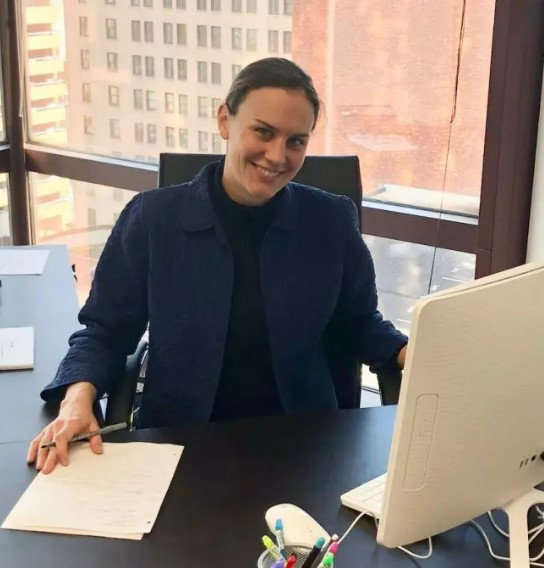
Bolton M. Harris, J.D., is a seasoned attorney with a formidable background in criminal law and a focus on healthcare law and compliance. As the in-house legal counsel at Medical Director Co., Harris brings a unique blend of prosecutorial experience and regulatory expertise to support healthcare professionals across Texas. Her career spans roles as a prosecutor in multiple counties and now as a trusted advisor on the legal intricacies of medical practice operations.
Education & Early Career
Bolton Harris completed her undergraduate studies at Southern Methodist University (SMU) in 2013. During her time at SMU, she was not only a dedicated student but also a competitive athlete on the university’s women’s swimming team. She went on to earn her Juris Doctor from Texas A&M University School of Law in 2016 and became a member of the Texas Bar that same year. Armed with a strong academic foundation and discipline honed as a student-athlete, Harris embarked on a career in criminal law immediately after law school.
Prosecutorial Experience in Texas
Bolton Harris began her legal career in public service as a criminal prosecutor. She served as an Assistant District Attorney in multiple jurisdictions, where she quickly rose through the ranks and handled a broad spectrum of cases. Some highlights of her prosecutorial career include:
- Assistant District Attorney, Dallas County, Texas: Prosecuted a high volume of criminal cases in one of the state’s busiest DA offices, gaining extensive trial experience in both misdemeanor and felony courts.
- Assistant District Attorney, Ellis County, Texas: Continued to hone her courtroom advocacy skills, known for meticulous case preparation and a tenacious pursuit of justice on behalf of the community.
- Assistant District Attorney, Navarro County, Texas: Broadened her legal expertise by handling diverse criminal matters in a smaller county, working closely with law enforcement and community leaders to uphold the law.
Through these roles, Harris built a reputation for being a tough but fair advocate. She brought numerous cases to trial and developed an in-depth understanding of the criminal justice system. This distinguished prosecutorial background laid a strong foundation for the next phase of her career in the private sector.
Healthcare Law & Compliance at Medical Director Co.
After her tenure as a prosecutor, Harris shifted her focus to healthcare law, applying her legal acumen to the medical field. She recognized that the same attention to detail and tenacity that served her in criminal law could benefit healthcare providers navigating complex regulations. Embracing this new direction, Harris became well-versed in the intricate laws governing medical practices – from licensing requirements to patient safety and privacy standards – and is passionate about helping practitioners stay compliant.
In her current role as the in-house attorney for Medical Director Co., Bolton Harris oversees all legal and compliance matters for the organization and its clients. Medical Director Co. is a nurse-owned firm that connects nurse practitioners (NPs), physician assistants (PAs), and registered nurses with qualified medical directors and collaborating physicians, offering fast placements and comprehensive compliance support for healthcare practices. Harris ensures that each of these partnerships and clinical ventures adheres to all applicable state and federal laws. She is responsible for drafting and reviewing collaborative practice agreements, advising on regulatory requirements, and providing ongoing legal counsel as clients establish and grow their clinics. Drawing on her prosecutorial eye for risk management, Harris proactively identifies potential legal issues and addresses them before they escalate, giving healthcare professionals peace of mind.
Bolton M. Harris’s multifaceted expertise – spanning high-stakes courtroom litigation to detailed healthcare compliance – makes her a formidable legal ally. Whether advocating in front of a jury or guiding a medical practice through regulatory hurdles, she remains committed to the highest standards of the legal profession. Her blend of courtroom-tested skill and healthcare law knowledge ensures that clients of Medical Director Co. receive elite-level counsel and steadfast protection in an ever-evolving legal landscape.